


By NEWSNEXUS Political Desk
ABUJA — The political landscape ahead of Nigeria’s 2027 general elections has been thrown into fresh uncertainty following a Federal High Court judgment in Abuja nullifying the leadership structure of the African Democratic Congress (ADC) led by former Senate President, Senator David Mark.
In a judgment delivered on Thursday, November 5, 2026, Justice Peter Lifu declared the Mark-led caretaker committee illegal and invalidated actions taken by the committee on behalf of the party.
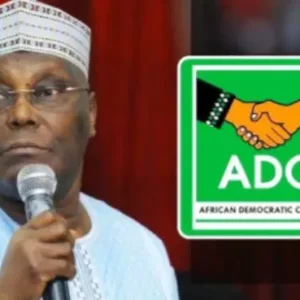
The decision includes the nomination of former Vice President Atiku Abubakar as the ADC’s presidential candidate for the 2027 general elections, potentially creating a major setback for the opposition party’s electoral preparations.
The judgment followed a suit instituted by Nafiu Bala Gombe, a former National Deputy Chairman of the ADC (North-East), who challenged the legitimacy of the process through which Senator Mark and other members of the caretaker leadership assumed control of the party.
THE LEGAL BATTLE BEHIND THE JUDGMENT
In his suit, marked FHC/ABJ/CS/1819/2025, Gombe argued that following the resignation of the party’s former National Chairman, Chief Ralph Nwosu, he was constitutionally positioned to assume leadership of the party.
He challenged the emergence of Senator Mark as National Chairman and former Osun State Governor, Rauf Aregbesola, as National Secretary, arguing that their emergence violated provisions of the ADC constitution and the Electoral Act.
The plaintiff consequently approached the court seeking an order nullifying decisions taken by the Mark-led leadership and restraining the affected officials from continuing to present themselves as the party’s legitimate national executives.
The court upheld the plaintiff’s claims and granted the reliefs sought.
The judgment effectively invalidates the authority under which the caretaker committee operated, including decisions taken in organising the party’s presidential primary.
IMPLICATIONS FOR ATIKU’S 2027 PRESIDENTIAL AMBITION
One of the most consequential aspects of the judgment concerns Atiku Abubakar’s presidential candidacy.
The former Vice President had emerged as the ADC’s presidential flag bearer through a primary election organised under the Mark-led leadership.
His name had reportedly been published by the Independent National Electoral Commission (INEC) as the party’s presidential candidate.
Atiku had also selected former Rivers State Governor, Rotimi Amaechi, as his running mate, with the opposition political platform already undertaking activities ahead of the 2027 presidential election.
However, with the court invalidating actions taken by the disputed leadership, the legal foundation of the nomination has now been brought into question.
The development raises important questions about whether the ADC will be required to conduct fresh internal processes or pursue further legal remedies to preserve its existing presidential ticket.
It is important to establish that the final implications for the presidential ticket will depend on the precise terms of the court’s enrolled order and any subsequent decisions of the appellate courts.
ADC VOWS TO CHALLENGE THE JUDGMENT
Reacting to the ruling, the ADC indicated that it would challenge the decision at the appellate court.
The party’s National Welfare Secretary, Nkemakolam Ukandu, who was subsequently joined as an interested party in the proceedings, said the judgment would be appealed.
The planned appeal introduces another layer of uncertainty into the party’s leadership dispute, particularly as preparations for the 2027 elections continue.
The development also comes barely 24 hours after Atiku Abubakar held a campaign rally in Sokoto State, demonstrating the extent to which the party had already begun mobilising political support ahead of the election.
NEWSNEXUS ANALYSIS: A LEADERSHIP CRISIS WITH WIDER ELECTORAL CONSEQUENCES
The latest judgment represents a significant development in the prolonged internal leadership dispute within the African Democratic Congress.
Beyond the immediate consequences for Senator David Mark and his leadership team, the ruling raises fundamental questions about internal democracy, constitutional compliance and the legal procedures through which political parties organise their affairs.
1. THE QUESTION OF INTERNAL PARTY DEMOCRACY
Political parties are expected to operate within the provisions of their constitutions and applicable electoral laws.
The dispute highlights the importance of ensuring that leadership transitions, appointments and internal electoral processes follow established procedures.
Where the legitimacy of a party’s leadership is successfully challenged in court, decisions taken under that leadership may become vulnerable to legal scrutiny.
2. THE FUTURE OF THE ADC’S PRESIDENTIAL TICKET
The implications for Atiku Abubakar’s candidacy are particularly significant.
A presidential nomination is not merely a political announcement; it is the outcome of a process governed by electoral laws and party regulations.
If the nomination is ultimately invalidated, the party could face difficult decisions concerning its presidential ticket, including whether fresh processes are necessary.
However, the ADC’s announced intention to appeal means the legal process is not necessarily concluded.
3. IMPLICATIONS FOR THE OPPOSITION
The ADC has positioned itself as an important platform within Nigeria’s opposition political landscape ahead of 2027.
The party’s leadership dispute therefore has implications beyond its internal membership.
Political organisation, candidate selection and the ability to present a unified platform are important considerations for any party preparing to participate in a national election.
The prolonged legal uncertainty could affect its organisational activities while the dispute remains unresolved.
4. THE ROLE OF THE JUDICIARY AND INEC
The development also reinforces the importance of judicial oversight in disputes involving compliance with party constitutions and electoral legislation.
INEC’s position will be particularly important as the legal proceedings develop.
The commission will have to act in accordance with valid court orders and applicable electoral requirements concerning the recognition of party leadership structures and candidates.
THE BIGGER PICTURE: 2027 ELECTIONS UNDER FRESH UNCERTAINTY
With the 2027 general elections approaching, the judgment introduces another important legal and political question into the preparations of Nigeria’s opposition parties.
The central issue is no longer simply who leads the ADC, but whether the decisions already taken under the disputed leadership can withstand judicial scrutiny.
For Atiku Abubakar, the development introduces fresh legal uncertainty into his presidential ambition.
For Senator David Mark and his associates, the immediate challenge is to contest the judgment and defend the legitimacy of the leadership structure they established.
For the ADC as an institution, the priority will be resolving its leadership crisis while addressing the consequences for its electoral preparations.
Ultimately, the appellate process and the precise interpretation of the court’s orders will be critical in determining the party’s next steps.
NEWSNEXUS will continue to monitor developments surrounding the ADC leadership dispute and its implications for the 2027 general elections.

Leave A Comment