



By NewsNexus Media
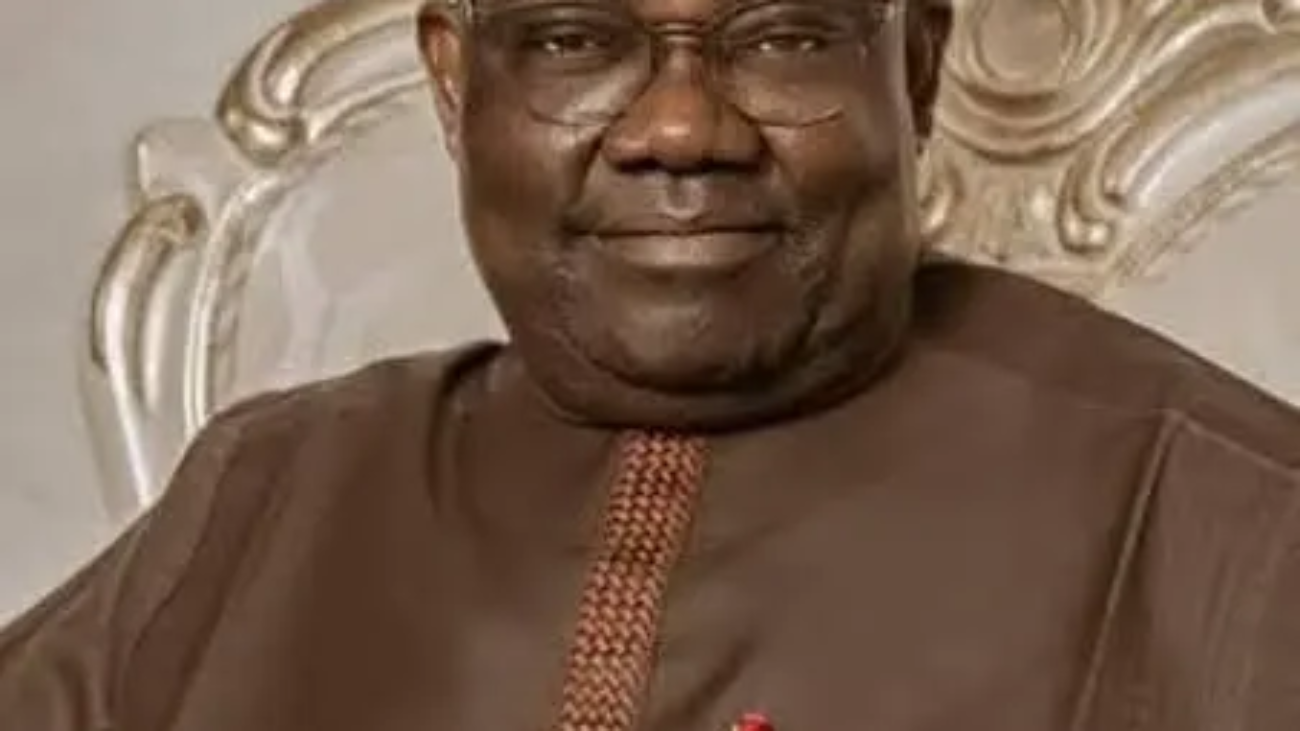
Former Deputy Senate Majority Leader and the 2027 Peoples Democratic Party (PDP) governorship candidate in Taraba State, Senator Emmanuel Bwacha, has called for a comprehensive rebuilding of the state’s economy, infrastructure, human capital and public institutions as Taraba marks its 35th anniversary.
In a statement issued on Thursday, August 27, 2026, titled “Rebuilding Taraba: An Address to the People of Taraba State on the 35th Anniversary of Statehood,” Bwacha reflected on the state’s journey since its creation on August 27, 1991, while outlining what he described as the urgent need to convert Taraba’s vast natural resources into economic prosperity.
The former senator acknowledged the contributions of past military and civilian administrations, including the governments of Jolly Nyame and the late Danbaba Suntai, citing investments in hospitals, schools, roads, the stadium, markets, the university, airport development and other public infrastructure.
According to him, earlier administrations achieved significant milestones despite operating with fewer resources.
“They built with fewer resources. Their legacy places a responsibility on us. With greater democracy, revenues, technology and knowledge, we must do more,” he said.
‘Our Problem Is Not Lack of Potential’
Bwacha argued that Taraba’s major challenge is not a lack of natural or human resources, but the inability to translate those resources into broad-based prosperity.
He pointed to the state’s agricultural land, rivers, mountains, forests, mineral deposits and tourism assets, including the Mambilla Plateau, Gashaka-Gumti National Park and Chappal Waddi.
He also highlighted Taraba’s production of crops and commodities including rice, maize, cassava, yam, sugarcane, cocoa, honey, palm oil and gum arabic, as well as reported deposits of gold, barite, zinc and bauxite.
“Our problem is not lack of potential. Our challenge is converting potential into prosperity,” he stated.
Poverty, Revenue and Dependence on FAAC
The PDP governorship candidate identified poverty as one of the most urgent challenges confronting the state, citing a 92.1 per cent multidimensional poverty incidence.
He said the statistics represented real-life challenges faced by mothers, children, farmers, graduates, entrepreneurs and rural communities.
Bwacha also raised concerns over Taraba’s dependence on federal allocations, stating that the state generates ₦16.06 billion in Internally Generated Revenue (IGR) compared with ₦220.58 billion from FAAC, with about 93 per cent of recurrent revenue coming from the Federation Account.
He argued that the size of a state budget should not be measured merely by its monetary value, but by the economic and social outcomes it produces.
“A ₦653 billion budget does not automatically create a strong economy. The real question is what the money produces,” he said.
Agriculture, Industry and Tourism
Bwacha proposed a shift from what he described as government spending to productive investment.
He called for the construction of roads connecting farmers to markets across the 16 local government areas, expansion of agricultural production and processing, and the establishment of a Taraba Export Council.
He also advocated industrialisation of the agricultural sector to create employment and reduce dependence on civil service jobs.
On solid minerals, he said Taraba should move beyond extraction to processing and manufacturing within the state.
He further called for the development of tourism sites such as the Mambilla Plateau, Gashaka-Gumti National Park, Chappal Waddi and Wunyo as commercial enterprises capable of generating employment and revenue.
Security as Economic Policy
The former senator also linked security directly to economic development, arguing that insecurity discourages farming and investment.
“A farmer afraid to enter his farm cannot produce. An investor afraid of losing capital will not come,” he said.
Bwacha stressed that with 86.6 per cent of Taraba’s population living in rural areas, development should not be concentrated in Jalingo.
He said the true measure of progress should be whether people in remote communities, farming settlements, mountain areas and border communities have better opportunities and living conditions.
‘It Is Time to Rebuild’
The PDP candidate outlined what he described as a rebuilding agenda centred on the economy, education, healthcare, roads, rural communities and public trust.
He said the objective should be to create a Taraba where citizens can access opportunities regardless of their location or background.
“Thirty-five years ago Taraba was created with a promise. At 35, let us make a new one: not a promise of what we will say, but a promise of what we will build.”
Bwacha concluded by declaring that Taraba had “waited long enough” and that the time had come to rebuild the state.
“It is time to rebuild,” he said.
The statement was signed by JY Nafinji, Senior Special Assistant on Media to Senator Emmanuel Bwacha, PDP Gubernatorial Candidate, Taraba State.
NewsNexus Media
Research | Media | Public Policy | Strategic Communications
NewsNexus.ng

Leave A Comment