

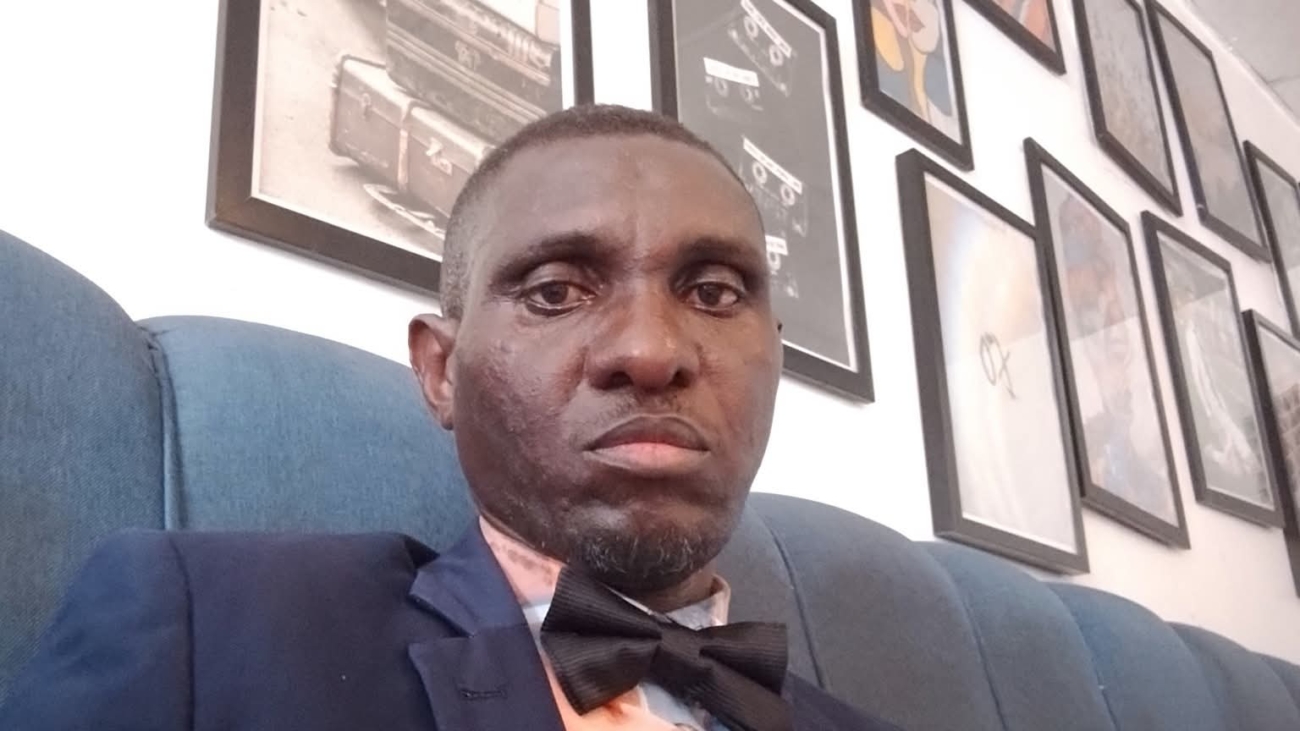

An Opinion by Abraham Maina Joda
Editor-in-Chief & Publisher, NewsNexus
Where Facts Matter
I have read Dr. Umar Ardo’s article, “The Fulani Are Not the Only Migrants Into Nigeria,” and I agree with him on one fundamental historical point: Nigeria is a product of centuries of migration, settlement, interaction, conquest, assimilation and intermarriage. No responsible student of Nigerian history should pretend that every ethnic group has remained permanently within the exact geographical territory it occupies today.
But that is precisely where I believe Dr. Ardo’s article begins to lose the plot.
As a Nigerian of the Wurkum ethnic group, I do not need to establish that my ancestors were here before the ancestors of another Nigerian before I can demand security, justice and peaceful coexistence. Neither should any Fulani Nigerian have to prove the antiquity of his or her ancestry before claiming his or her Nigerian identity.
The issue before us is not “Who migrated into Nigeria?” The issue is how Nigerians should live together in the 21st century. And on this point, I believe the article unnecessarily distorts the conversation.
WHO IS ASKING THE FULANI TO LEAVE NIGERIA?
The author repeatedly builds his argument around the apparent suggestion that people are questioning the right of the Fulani to be Nigerians.
But who is actually making that argument?
Who is saying that the Fulani are not Nigerians?
Who is saying that Fulani communities that have lived in Nigeria for generations should leave?
Who is saying that only ethnic groups regarded as “indigenous” should have rights in Nigeria?
That is not the argument.
The argument is that no ethnic group, whether indigenous or migrant, should use violence, criminality or force to impose its will on another community.
That principle is not anti-Fulani.
It is pro-Nigeria.
MIGRATION DOES NOT GIVE ANYONE A LICENCE FOR VIOLENCE
The fact that the ancestors of Hausa, Igbo, Tiv, Jukun, Chamba, Fulani or other peoples migrated at different periods does not give anyone a licence to invade any community today.
Historical migration and contemporary criminality are two different subjects.
If any group migrates peacefully, settles peacefully, farms peacefully, trades peacefully, raises cattle peacefully and respects the laws of its host community, there is no problem.
But when armed men enter communities, kill people, burn homes, kidnap citizens, destroy farms or attempt to occupy land by force, the appropriate question is not where their ancestors came from.
The appropriate questions are:
Who committed the crime, why did they commit it, and why has the state failed to stop it?
That is the conversation we should be having.
STOP DRAGGING OTHER ETHNIC GROUPS INTO THE ARGUMENT
I also find the constant attempt to introduce Hausa, Igbo, Tiv, Jukun, Chamba and other ethnic groups into this particular argument unnecessary.
Yes, many Nigerian ethnic groups have established migration histories.
So what?
If someone raises concerns about violent herder attacks, responding with the history of Bayajidda, Tiv migration, Jukun traditions or Chamba movements does not answer the question.
It changes the subject.
It is like saying: “Your ancestors also migrated, therefore you cannot complain about what is happening today.”
That is not a logical response.
We can acknowledge everyone’s complex history without using that history to evade contemporary realities.
THIS IS NOT ABOUT STIGMATISING THE FULANI
Let me be very clear.
I reject the idea that every Fulani should be treated as a criminal because some criminal groups are identified as Fulani.
That would be unfair and intellectually dishonest.
There are millions of peaceful Fulani Nigerians who are farmers, businessmen, civil servants, politicians, academics, professionals, traditional rulers and ordinary citizens. They have every right to live, work and prosper anywhere within Nigeria in accordance with the law.
But the opposite argument is equally important:
The fact that the majority of Nigerian Fulani are peaceful must not prevent us from speaking honestly about criminality involving some Fulani.
That is not stigmatisation.
It is accountability.
And I believe responsible Fulani leaders should be among the first people to condemn such criminality.
THE SAME STANDARD MUST APPLY TO EVERYBODY
If a Wurkum commits a crime, he or she should face the law.
If a Tiv commits a crime, he or she should face the law.
If a Jukun commits a crime, he or she should face the law.
If a Hausa commits a crime, he or she should face the law.
If an Igbo commits a crime, he or she should face the law.
And if a Fulani man commits a crime, he or she should face the law.
Ethnicity should neither be a shield nor a weapon.
This is the Nigeria I believe we should be building.
THE WEST AFRICAN DIMENSION CANNOT SIMPLY BE IGNORED
There is also a larger issue that deserves serious discussion.
The phenomenon of violent pastoralist-related conflict, banditry and kidnapping is not limited to one Nigerian state or one Nigerian ethnic community.
Similar security challenges involving pastoral communities and armed groups have occurred in different parts of West Africa.
That does not mean that every Fulani in West Africa is involved in criminality. Far from it.
But it does mean that serious scholars and community leaders should be asking difficult questions about the factors driving these conflicts—land pressure, climate change, cattle routes, arms proliferation, weak borders, criminal networks, competition over resources, political manipulation and the breakdown of traditional conflict-resolution mechanisms.
Simply responding that “other Nigerians also migrated” does not address these problems.
I AM NOT ASKING ANYBODY TO LEAVE NIGERIA
As a Wurkum Nigerian, I have no interest in deciding who belongs in Nigeria based on ancient migration routes.
Nigeria belongs to Nigerians.
The Fulani belong here.
The Wurkum belong here.
The Tiv belong here.
The Jukun belong here.
The Hausa belong here.
The Igbo belong here.
The Chamba belong here.
And the many other peoples who make up our country belong here.
But belonging comes with responsibilities.
No Nigerian should have to surrender his ancestral home, farm, community, life or livelihood because an armed group claims a historical right to occupy it.
And no pastoralist should have his cattle stolen, his family attacked or his livelihood destroyed because of the criminal conduct of someone else.
Justice must work in both directions.
LET US STOP ARGUING ABOUT WHO CAME FIRST
Nigeria is 21st-century Nigeria.
We cannot solve 21st-century security problems by turning them into an endless contest over ancient ancestry.
I therefore disagree with the attempt to turn this discussion into a referendum on whether the Fulanis are Nigerians.
Nobody is chasing the Fulani out of Nigeria.
Nobody needs to prove that the Fulanis have no place in Nigeria.
Nobody needs to pretend that other Nigerian ethnic groups have never migrated.
The real demand is much simpler:
No group should invade another community by force. No group should kill innocent people. No group should engage in kidnapping or banditry. No group should destroy another person’s livelihood with impunity. And no criminal should receive ethnic protection.
That is not anti-Fulani.
That is not anti-Hausa.
That is not anti-Tiv.
That is not anti-Jukun.
That is not anti-Chamba.
That is simply pro-Nigeria.
As Editor-in-Chief and Publisher of NewsNexus, and as a Nigerian of Wurkum heritage, I believe we must be able to discuss these difficult issues honestly without turning every criticism of criminality into an attack on an entire ethnic group.
History should help us understand one another. It should not be weaponised to distract us from the violence and insecurity confronting Nigerians and Nigeria today.
The question is no longer who arrived first.
The question is:
Can we learn to live together without killing one another?
That is the conversation Nigeria urgently needs.
By Abraham Maina Joda
Editor-in-Chief & Publisher, NewsNexus
Writes from Jalingo, Taraba State

Leave A Comment