


By Abraham Maina Joda
Publisher, NewsNexus
Introduction
Taraba State’s rich cocoa belt has long been recognized as one of Nigeria’s most promising agricultural assets. Yet, like many cocoa-producing regions across Africa, farmers continue to grapple with declining soil fertility, rising production costs, climate change and crop diseases.
Seeking sustainable solutions, Agroforestry Impact and Regeneration (AIR) Nigeria, in collaboration with the Taraba State Government, recently concluded a pilot regenerative agroforestry programme in Abong, Kurmi Local Government Area, where 200 cocoa farmers underwent intensive practical training designed to restore soil health, improve productivity and unlock new income opportunities through carbon finance.
In this exclusive interview with NewsNexus Publisher, Abraham Maina Joda, Mrs. Diana Doheny, President and Chief Executive Officer of AIR US/AIR Nigeria, and Mr. Francis Bosah, African Technical Director of AIR US & AIR Nigeria, explain why they believe Taraba could become a continental model for sustainable cocoa production.
“Transformation Begins with Community Ownership”
Abraham Maina Joda:
How did AIR first establish its partnership with Taraba State?
Mrs. Diana Doheny:
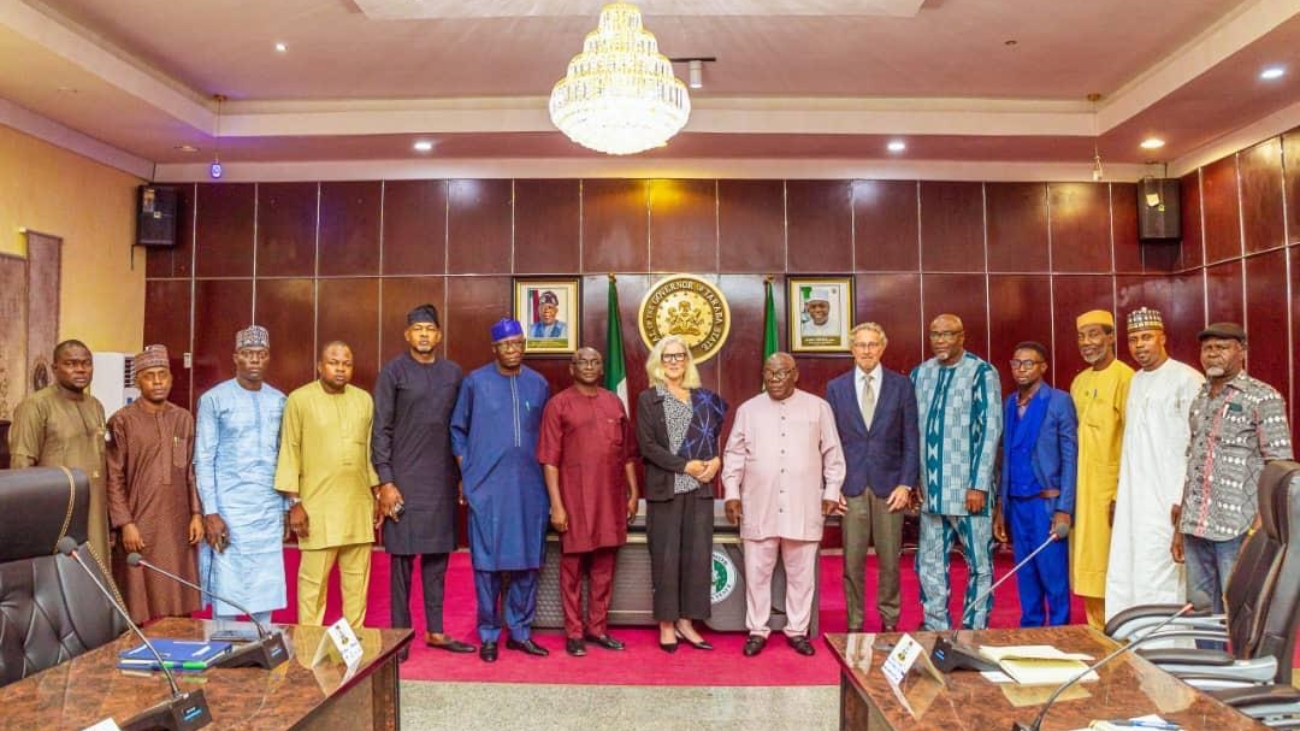
Our engagement began through a formal invitation from the Office of the Deputy Governor of Taraba State. From our earliest meetings, the state’s leadership demonstrated genuine commitment to agricultural transformation.
We engaged government officials, including Dr. Emmanuel Lawason, now Commissioner for Urban and Rural Development, received the support of the Speaker of the Taraba State House of Assembly, and, most importantly, visited Kurmi Local Government Area to consult directly with traditional rulers, community leaders and cocoa farmers.
For us, sustainable development starts with the people. Without community ownership, no agricultural programme can achieve lasting success.
Building a New Agricultural Model
Abraham Maina Joda:
What proposal did AIR present?
Mrs. Diana Doheny:
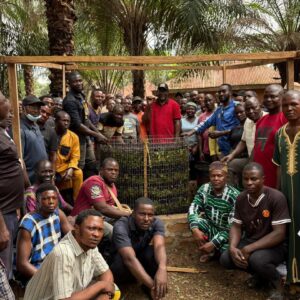
We proposed a pilot involving 200 cocoa farmers who would participate in a 90-day intensive practical training programme supported by a demonstration farm.
In addition, we designed a 24-month scientific research project that will carefully measure improvements in soil quality and productivity resulting from regenerative farming practices.
Our objective is to generate credible scientific evidence that can support expansion across Taraba State.
Replacing Chemicals with Biology
Abraham Maina Joda:
What exactly is regenerative agroforestry?
Mr. Francis Bosah:
It is an agricultural system that restores nature while increasing productivity.
The model rests on five key principles:
- Eliminating synthetic fertilizers and chemical pesticides.
- Maintaining permanent ground cover.
- Practising multi-species cropping.
- Minimizing soil disturbance.
- Integrating livestock into farming systems.
Instead of relying on expensive chemicals, regenerative agriculture harnesses biological processes to rebuild healthy soils and resilient farms.
Why Cocoa Farmers Need a Different Approach
Abraham Maina Joda:
Why is this important for cocoa production?
Mr. Francis Bosah:
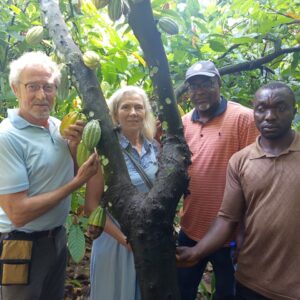
Many cocoa farmers are struggling because the cost of imported chemical inputs continues to rise while soil fertility declines.
Our approach allows farmers to produce biological fertilizers from resources already available on their farms.
It also addresses diseases such as Black Pod Disease by improving soil biology, restoring canopy balance and strengthening the natural resilience of cocoa trees.
We are rebuilding the farming ecosystem instead of simply treating individual problems.
Learning by Doing
Abraham Maina Joda:
How was the training conducted?
Mr. Francis Bosah:
The 200 participants were divided into four groups of fifty.
Training combined classroom instruction with extensive practical sessions on the demonstration farm.
Farmers learned modern canopy management, thermophilic compost production, carbon-to-nitrogen balancing, compost temperature monitoring and biological fertilizer production using agricultural residues.
Every lesson emphasized practical application and long-term sustainability.
The Science Behind Biochar
Abraham Maina Joda:
Biochar has become a major talking point. What is it?
Mr. Francis Bosah:
Biochar is not ordinary charcoal.
It is a stable carbon material produced by heating woody biomass inside specially designed oxygen-limited kilns.
When combined with compost, it increases microbial activity, improves water retention, enhances soil structure and stores carbon in the soil for decades.
Its environmental and agricultural benefits are remarkable.
Turning Climate Action into Farmer Income
Abraham Maina Joda:
Can biochar also generate income?
Mrs. Diana Doheny:
Yes.
Biochar creates environmental value that can be converted into economic value.
Every tonne of quality biochar permanently stores significant amounts of carbon dioxide. Through internationally recognized Monitoring, Reporting and Verification (MRV) systems, these reductions can generate certified carbon credits.
Those credits can then be sold to companies seeking to offset emissions, creating an additional source of income for participating farmers.
Measuring Success Through Science
Abraham Maina Joda:
How will the project be evaluated?
Mr. Francis Bosah:
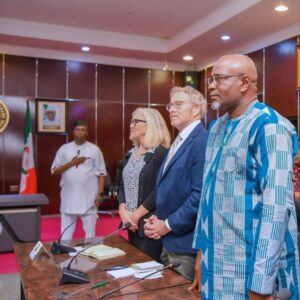
We partnered with the Federal University Wukari.
Researchers have already collected baseline soil samples from eight research plots before biological treatments began.
Over the next 24 months, regular laboratory testing will monitor improvements in soil chemistry, biological activity and productivity.
Scientific evidence is essential to demonstrating the effectiveness of regenerative agriculture.
Lessons from the Pilot
Abraham Maina Joda:
What has the pilot taught you?
Mr. Francis Bosah:
One important lesson is that timing is critical.
Future composting and biochar production will be scheduled immediately after harvest and before heavy rains.
Equally encouraging is the enthusiasm shown by farmers. They understand that the existing chemical-dependent system is becoming increasingly expensive and unsustainable.
Livestock as Partners in Agriculture
Abraham Maina Joda:
How does livestock fit into cocoa farming?
Mr. Francis Bosah:
Livestock is an integral part of regenerative agriculture.
Properly managed animals improve soil fertility through manure and urine while enhancing soil structure.
Chickens naturally control insect populations, while rabbit manure and urine provide highly effective organic nutrients that stimulate plant growth without damaging crops.
Together, crops and livestock create a balanced and resilient farming ecosystem.
The Road Ahead
Abraham Maina Joda:
What comes next?
Mrs. Diana Doheny:
Our immediate focus is to complete the analysis of all field data from the Kurmi pilot.
Those findings will form the basis of a comprehensive proposal to the Taraba State Government for the expansion of regenerative agroforestry across the state’s cocoa-producing communities.
Our vision is to help build a cocoa economy that is environmentally sustainable, economically profitable and globally competitive.
NewsNexus Analysis
The partnership between AIR Nigeria and the Taraba State Government represents more than an agricultural intervention. It is a strategic attempt to redefine cocoa production through science, environmental restoration and innovative financing.
If successfully implemented at scale, regenerative agroforestry could reduce production costs, restore degraded farmland, improve farmers’ incomes, create opportunities in international carbon markets and strengthen Taraba State’s position as one of Nigeria’s leading cocoa-producing regions.
For thousands of cocoa farmers across Taraba, the initiative may well represent the beginning of a greener, more resilient and more prosperous future.

Leave A Comment