

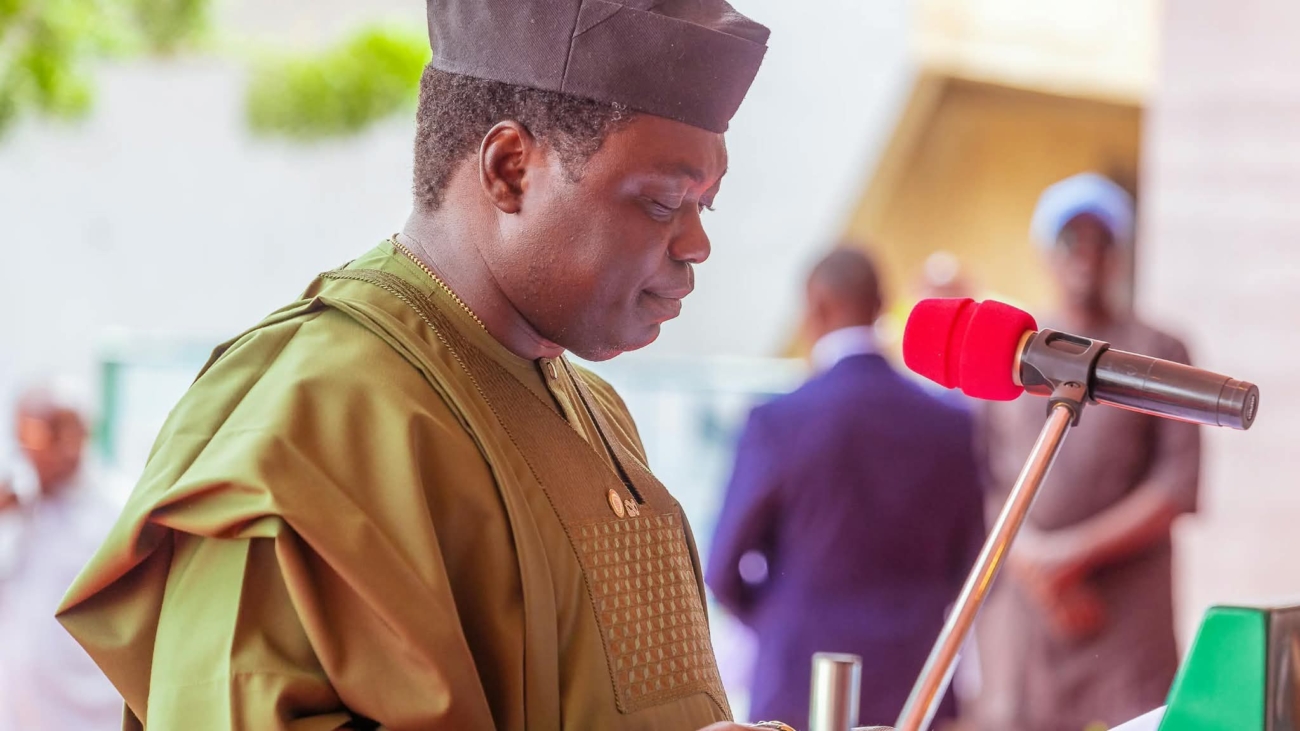
Council says Tarabans should judge candidates by performance, policies and accountability rather than political rhetoric
By NewsNexus Political Desk
The Kefas Campaign Council has challenged Senator Emmanuel Bwacha to explain his record in public office and outline how he intends to address Taraba State’s development challenges ahead of the 2027 governorship election.
The council’s position followed Bwacha’s description of the forthcoming election as a contest between “light and darkness” and his promise to restore the state’s “lost glory.”
In a press statement issued ahead of the election, the council argued that while political expressions are part of election campaigns, the electorate should focus on candidates’ records, policy proposals and capacity to deliver measurable results.
The statement was signed by Hon. Emmanuel Bello, Director of Media and Strategic Communication of the Kefas Campaign Council, 2027.
COUNCIL QUESTIONS BWACHA’S RECORD
The council noted that Bwacha represented Taraba South Senatorial District in the National Assembly from 2011 to 2023, arguing that his years in public office provide a basis for assessing his contributions to the development of the state.
It acknowledged Bwacha’s right to seek the governorship again after losing the 2023 election but maintained that his previous experience in public service should form part of the conversation about his suitability for the office.
According to the council, Tarabans deserve clear explanations of what candidates intend to change, how they plan to achieve their objectives and what lessons they have learnt from their years in government.
The council’s position places the spotlight on the records of both the former senator and the incumbent governor as political activities gradually intensify ahead of the 2027 election.
KEFAS ADMINISTRATION HIGHLIGHTS EDUCATION INTERVENTIONS
Defending Governor Agbu Kefas’s administration, the council highlighted programmes in education, infrastructure, agriculture, youth development and security.
On education, it cited the introduction of free education at the basic and secondary school levels and a 50 per cent reduction in tuition fees at state-owned tertiary institutions.
The council also said the state government had funded candidates sitting the West African Examinations Council (WAEC) and National Examinations Council (NECO) examinations.
According to the statement, the administration expended approximately ₦3 billion on examination fees for students in 2026, describing the intervention as an effort to reduce the financial burden on parents and guardians.
The statement did not provide a detailed breakdown of the expenditure or the number of beneficiaries.
ROAD PROJECTS AND AGRICULTURAL DEVELOPMENT
The campaign council also pointed to road projects being pursued by the Kefas administration, including the Mararaba–Baissa, Takum–Lissam, Wukari–Kente–Chinkai and Zing–Yakoko–Monkin roads.
It said the projects were intended to improve connectivity, facilitate commerce and support agricultural development across communities in the state.
However, the council acknowledged, in principle, the importance of assessing such projects by their construction timelines, completion status and practical benefits to residents.
On agriculture, the statement highlighted the procurement and distribution of more than 850 tractors, alongside the provision of improved seedlings and other agricultural inputs.
It also cited the establishment of Taraba Seed Production Limited as part of efforts to strengthen agricultural production and harness the state’s economic potential.
The council maintained that the effectiveness of these interventions should ultimately be measured by farmers’ access to the equipment and inputs, improvements in productivity and the economic opportunities created for agricultural communities.
₦500 MILLION YOUTH SUPPORT INITIATIVE CITED
Youth empowerment also featured prominently in the council’s defence of the administration.
The statement said the government commenced a ₦500 million youth business support initiative in August 2026, with another phase announced for November.
It further claimed that an additional ₦1 billion had been released for youth development.
The council also referenced the Youth Development Roadmap for 2026–2031 and the long-term Taraba Youth Agenda 2050, describing them as frameworks intended to promote enterprise development and expand opportunities for young people.
The statement did not provide further details on the beneficiaries, disbursement arrangements or the specific outcomes recorded under the initiatives.
SECURITY, PENSIONS AND SALARY PAYMENTS
On security, the council maintained that the Kefas administration had made progress in addressing insecurity, although it acknowledged that security remained a continuing concern for communities across Taraba State.
It also cited the payment of outstanding pensions and gratuities covering the 2012–2017 period, alongside the regular payment of salaries.
The statement further noted that township roads in Jalingo were receiving attention.
These issues are likely to remain important in the broader assessment of the administration, particularly as residents consider the impact of government policies on their livelihoods, access to infrastructure and general welfare.
The council also referenced Governor Kefas’s recognition as Leadership Newspaper’s Governor of the Year 2026, while maintaining that the ultimate measure of the administration’s performance should be its tangible impact on ordinary citizens.
COUNCIL CALLS FOR ISSUE-BASED CAMPAIGN
The Kefas Campaign Council urged political actors to focus on verifiable achievements, outstanding commitments and credible policy alternatives rather than relying exclusively on campaign slogans and political metaphors.
It said Bwacha had the right to present his vision for Taraba and explain why he believed he deserved another opportunity to govern the state.
At the same time, it insisted that Governor Kefas should also be assessed on the promises fulfilled by his administration, commitments yet to be met and the practical effects of its policies.
The council maintained that no candidate should be judged solely by campaign rhetoric and no administration should be exempt from public scrutiny.
It argued that anyone promising to restore Taraba’s “lost glory” should explain what was lost, how the situation arose and what specific policies would deliver lasting improvements.
THE ROAD TO 2027
The exchange highlights the emerging political contest over performance, development and public expectations as Taraba State approaches another governorship election.
For the incumbent administration, the challenge will be to demonstrate that its policies are producing measurable improvements in education, infrastructure, agriculture, employment and security.
For Bwacha and other prospective challengers, the challenge will be to present credible alternatives and explain how their proposals would address the state’s longstanding development concerns.
Ultimately, the electorate will have to assess competing claims against verifiable records, policy commitments and the realities facing communities across Taraba State.
NewsNexus will continue to monitor political developments in Taraba State and report on the claims, records and policy proposals of the major political actors ahead of the 2027 governorship election.

Leave A Comment