

By Abraham Maina Joda
Government is often measured in policies, programmes and budgets. For vulnerable people, however, its impact is more personal: a child rescued from trafficking, a woman empowered to earn a living, a survivor finding shelter and justice, or a widow receiving support when she needs it most.
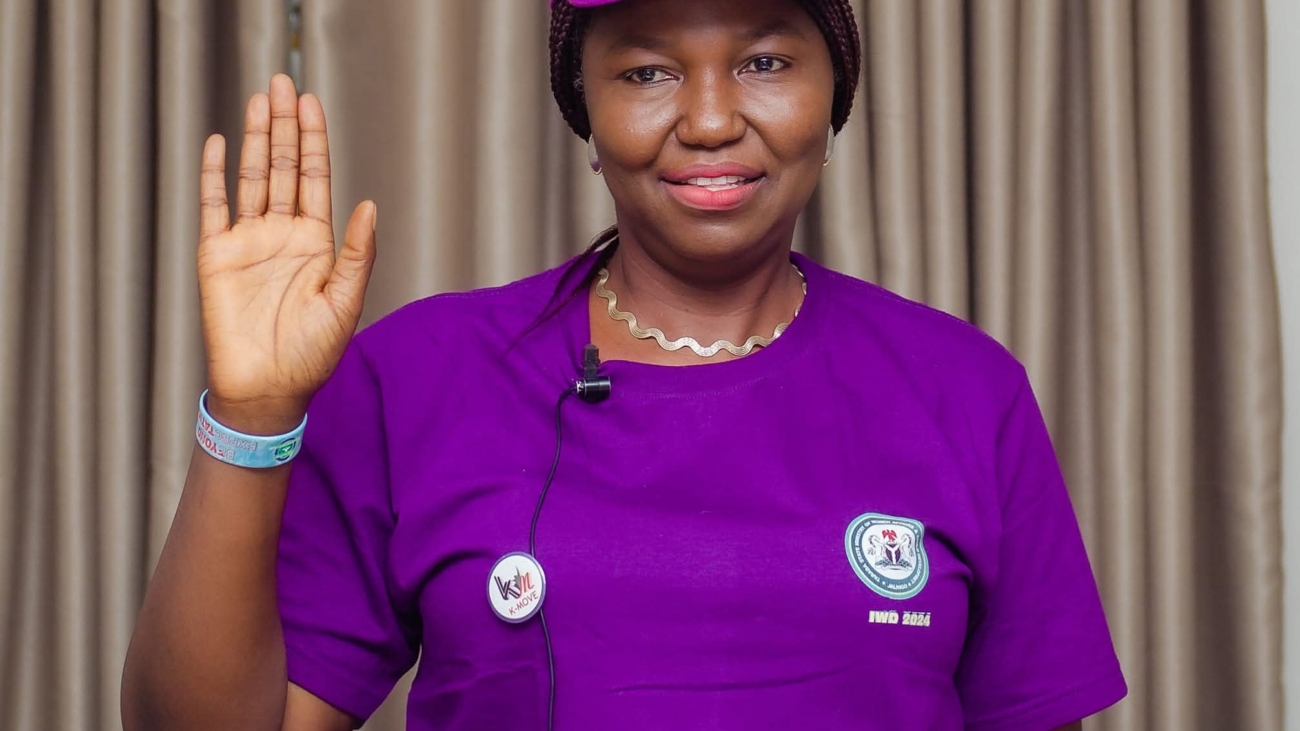
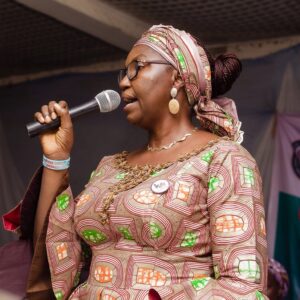
This human dimension increasingly defines the public profile of Mrs. Mary Jandora Sinjen, FCNA, ACTI, Commissioner for Women Affairs and Child Development in Taraba State.
Since her appointment in 2023, Sinjen has been associated with interventions spanning women’s economic empowerment, child protection, anti-trafficking, gender-based violence, education, social inclusion and support for vulnerable persons.
From Accounting and Business to Public Service
Before entering government, Sinjen built a professional career in accounting and business. She worked as a Senior Accountant with the Nigeria Ports Authority (NPA) and later became a businesswoman.
That experience in accounting, administration and entrepreneurship provided a foundation beyond conventional public service before her eventual call to serve as Commissioner.
Protecting Children, Restoring Families
One of the most significant areas of her tenure has been child protection.
Working with agencies including NAPTIP, the ministry has been associated with the rescue and reunification of trafficked children. Reports in 2025 credited the intervention with 35 children rescued and reunited with their families, followed by the rescue of eight children and the reunification of another 10 in subsequent interventions.
The ministry’s response has also recognised that trafficking is often driven by poverty and lack of opportunity. In the reported Makarfi case, attention to the absence of a school led to efforts to facilitate construction of a primary school.
Sinjen’s office has also intervened in cases involving abused children. In the widely reported case of 17-year-old Iwasen Terhemba, the ministry coordinated with relevant authorities and facilitated medical, psychosocial and legal assistance.
Standing with Women Facing Violence
Gender-based violence has been another major focus.
Under Sinjen’s leadership, the ministry has supported implementation of the Violence Against Persons Prohibition framework, awareness and reporting mechanisms, and institutional responses to GBV. Reports have also linked the ministry to a survivor shelter providing counselling, legal assistance and vocational support.
The approach connects protection with empowerment: survivors may require not only justice and safety, but counselling and economic independence to rebuild their lives.
Empowerment as Economic Development
Women’s empowerment has equally featured prominently in Sinjen’s work.
At the 2026 ministerial assessment of the Nigeria for Women Project Scale-Up in Taraba, she described the programme as a means of moving rural women from subsistence activities towards commercial agricultural enterprises.
Reported figures include more than 162,445 women reached, over 6,900 Women Affinity Groups established, ₦3.548 billion in livelihood grants, ₦2.388 billion in savings mobilised, and 40 livelihood collectives involved in rice, groundnut and oil-palm processing.
The philosophy is that empowerment should go beyond handouts by giving women the skills, organisation, savings and productive opportunities to strengthen their families and communities.
Giving Children a Voice
Sinjen’s agenda has also included children’s participation.
In 2024, Taraba’s previously inactive Children’s Parliament was revived, with Queen Dooga Gbashi of Donga LGA elected Speaker.
At the 2026 Children’s Day celebration, Sinjen emphasised education, protection and inclusion, stressing that every child, regardless of gender, ability, background or social status, deserves the opportunity to learn, grow and fulfil their potential.
Beyond the Office
Some aspects of Sinjen’s engagement with vulnerable people extend beyond formal government programmes.
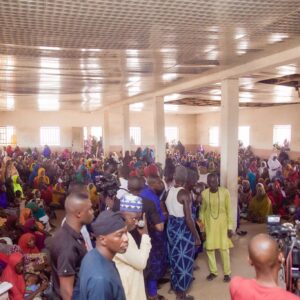
A December 2023 account published through the ministry’s social-media channel reported that she reached out to more than 300 widows in Jen, Karim Lamido LGA, during Christmas. Other social-media accounts have attributed personal and community support to her, including assistance to vulnerable people.
Such activities should be distinguished from formally funded government programmes and should not automatically be classified as government expenditure. They nevertheless offer another perspective on her engagement with vulnerable people.

Faith, Family and Service
Sinjen’s public profile also reflects a strong Christian identity and association with the Redeemed Christian Church of God (RCCG). Members of the Christian community have described her as a dependable supporter of church activities and Christian causes, with reported assistance extending to church initiatives, ministers, women, children and people experiencing hardship.
This faith-based engagement mirrors themes present in her public work—compassion, human dignity, service and concern for vulnerable people.
Away from public office, Sinjen is a wife and mother. She is married to Major General Boniface Robert Sinjen, a senior Nigerian military officer. While he maintains a relatively private family profile, their family partnership represents another dimension of her life alongside public service.
Governor Kefas and Institutional Support
Sinjen’s tenure has also benefited from the confidence and institutional support of the Executive Governor of Taraba State, Dr. Agbu Kefas, who found her worthy of appointment to lead the ministry.
The Governor’s administration has provided backing for programmes addressing women, children and vulnerable persons, within its broader emphasis on inclusion, social protection and economic empowerment.
That support also places responsibility on the Commissioner to translate the confidence of the Governor into measurable results. The partnership between political leadership and the ministry is ultimately significant only when government attention produces tangible improvements in people’s lives.
A National Platform for Taraba
Sinjen’s leadership gained further national visibility when Taraba hosted the 26th National Council on Women Affairs, Child Advancement and Social Development in August 2026.
Representing Governor Kefas, she called for stronger partnerships and practical strategies capable of translating national policies into grassroots impact, stressing that council resolutions must ultimately be felt by women, children and vulnerable Nigerians.
NewsNexus Perspective
Mary Jandora Sinjen’s story is therefore broader than that of a government commissioner. It combines a professional background in accounting and business, public administration, women’s empowerment, child protection, anti-trafficking, GBV response, education, social inclusion, faith and community service.
The central theme running through much of the work associated with her ministry is the connection between protection and empowerment.
A trafficked child needs rescue, but also education. A survivor of violence needs justice, but may also need shelter, counselling and economic independence. A rural woman may need financial support, but also skills, organisation and access to sustainable markets.
The ultimate test, however, remains outcomes: how many women achieve lasting economic independence, how many rescued children remain safely with their families, how many survivors rebuild their lives, and whether empowerment programmes continue delivering benefits after initial support ends.
For NewsNexus, that is where the human story meets accountability.
Behind every programme is a person. Behind every figure is a family. And behind every government intervention is the expectation that someone’s life should become better.
For Mrs. Mary Jandora Sinjen, public office provides the platform—but the people remain the measure of the service.

Leave A Comment