

By NEWSNEXUS Political Desk
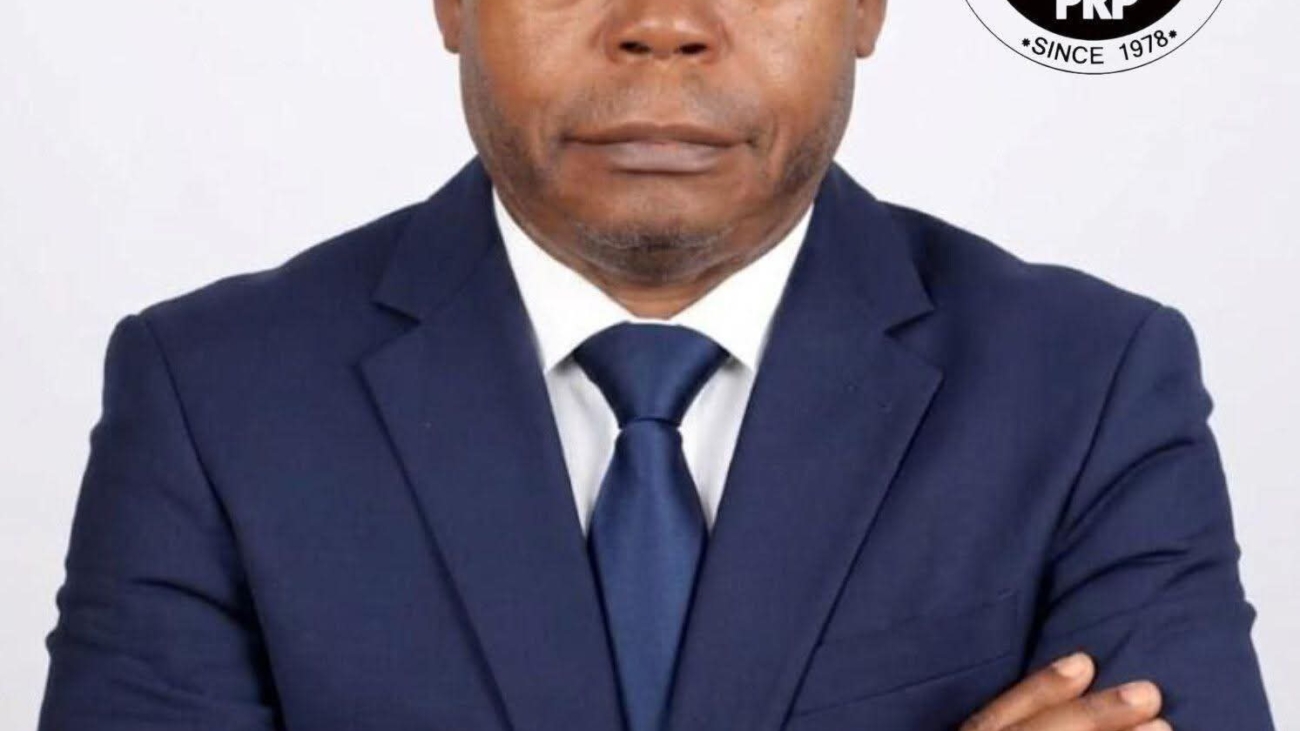
As political activities gradually gather momentum ahead of the 2027 governorship election in Taraba State, attention is increasingly shifting beyond campaign slogans to the competing ideas and policy visions that will define the state’s future. Among the emerging opposition figures seeking to shape that conversation is Engr. Josiah Wukari Wasa, the governorship candidate of the People’s Redemption Party (PRP).
Known among supporters as “Mr. Fixer,” Wasa has built his political identity around the promise of practical governance, fiscal discipline and people-centred development. His campaign theme—”Experience. Integrity. Service.”—reflects an attempt to present himself as a technocrat capable of translating decades of engineering and management experience into effective public administration.
Unlike campaigns driven largely by political rhetoric, Wasa’s public engagements have increasingly focused on governance reforms, economic productivity, social justice and institutional accountability.
A Career Built on Engineering and Global Experience
Born in 1957 in Takum Local Government Area of Taraba State, Wasa attended Sudan Interior Mission (SIM) schools before joining the then Nigerian National Oil Corporation (NNOC), later renamed the Nigerian National Petroleum Corporation (NNPC), through its cadet recruitment programme in 1977.
His professional training as a marine engineer took him to Liverpool in the United Kingdom, after which he served aboard oil tankers and commercial vessels, travelling across almost every continent except Australia.
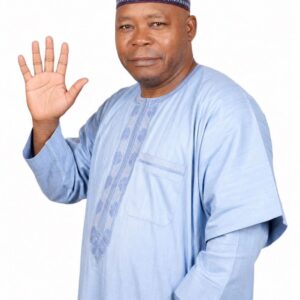
That international exposure, supporters argue, broadened his understanding of infrastructure development, logistics, industrial management and efficient public systems—experiences he now says should be deployed to accelerate Taraba’s development.
Following his retirement from public service, Wasa established Seajarma Nigeria Limited and remained active in maritime and engineering-related ventures while gradually deepening his involvement in public affairs and politics.
The PRP’s Redemption Philosophy
Wasa’s politics are closely aligned with the ideological foundations of the People’s Redemption Party, whose philosophy traces back to the late Mallam Aminu Kano and its commitment to social justice, grassroots empowerment and the protection of ordinary citizens.
Following his affirmation as the PRP’s governorship candidate, party leaders described the campaign as “The Redemption Journey,” positioning it as a movement intended to restore accountability, transparency and people-oriented governance in Taraba State.
Throughout his speeches, Wasa frequently invokes Aminu Kano’s philosophy that leadership should be measured not by political privilege but by service to the people.
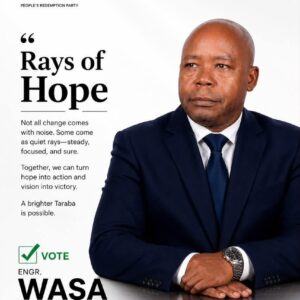
A Campaign Anchored on “The Taraba Fix”
Perhaps the most distinctive feature of Wasa’s campaign is the rollout of a series of policy messages under the banner “The Taraba Fix.”
Rather than limiting his campaign to broad promises, the initiative breaks governance into sector-specific priorities designed to address everyday challenges facing citizens.
Agriculture: From Subsistence to Prosperity
Agriculture occupies a central place in Wasa’s economic blueprint.
Describing Taraba as one of Nigeria’s most naturally endowed agricultural states, he argues that government should move beyond subsistence farming by promoting mechanisation, expanding irrigation, improving rural roads and supporting agro-processing industries.
His proposals include affordable agricultural financing, access to quality seeds and fertilisers, stronger commodity value chains and better market access for farmers.
For Wasa, empowering farmers is not simply an agricultural policy but an economic strategy capable of reducing unemployment, improving food security and increasing internally generated revenue.
Infrastructure as Economic Development
Road infrastructure also features prominently in his campaign.
According to Wasa, roads should not merely be viewed as construction projects but as economic assets that connect farmers to markets, children to schools, patients to hospitals and businesses to consumers.
He has consistently argued that investments in durable infrastructure can stimulate trade, improve service delivery and unlock rural economic opportunities across Taraba’s sixteen local government areas.
This emphasis follows his criticism of what he describes as poor-quality project execution and inadequate monitoring of public infrastructure.
Primary Healthcare Close to the People
Healthcare represents another cornerstone of his agenda.
Following his review of Taraba’s first-quarter 2026 budget performance, Wasa expressed concern over what he described as insufficient capital investment in primary healthcare.
His campaign proposes strengthening ward-level health centres through improved staffing, essential medicines, maternal healthcare services, modern equipment and better facilities.
The objective, he says, is to ensure that quality healthcare begins within local communities rather than requiring citizens to travel long distances in search of medical services.
Youth Employment and the Fight Against Drug Abuse
Wasa has repeatedly linked youth unemployment to rising drug abuse and insecurity.
Rather than viewing substance abuse purely as a law enforcement challenge, he argues that sustainable solutions require job creation, entrepreneurship support, vocational training and rehabilitation programmes.
His campaign slogan—”Jobs Over Drugs”—captures that philosophy.
By creating economic opportunities, he believes young people will be better positioned to pursue productive careers rather than becoming vulnerable to crime and addiction.
Security Through Opportunity
Security also forms an important component of his policy agenda.
Rather than relying exclusively on conventional policing, Wasa advocates a broader security strategy built around community participation, youth employment, improved rural infrastructure and technology-driven coordination among security agencies.
His campaign argues that safer communities emerge when economic opportunities expand and government services become more accessible.
Building a Digital Taraba
Recognising the growing importance of technology in economic development, Wasa has also placed digital transformation at the centre of his vision.
He proposes investments in digital literacy, innovation hubs, broadband expansion, e-governance platforms and technology-driven entrepreneurship.
His campaign believes that improving internet connectivity and expanding digital skills can prepare Taraba’s young population for opportunities in the global knowledge economy.
The proposed digital governance framework also seeks to improve transparency by automating government services, strengthening public financial management and reducing opportunities for corruption.
In Wasa’s words, “A connected Taraba is a competitive Taraba.”
Tourism and Economic Diversification
Beyond agriculture, Wasa sees tourism as another untapped economic opportunity.
With its mountains, waterfalls, wildlife reserves and rich cultural heritage, he argues that Taraba possesses significant tourism potential capable of generating employment, attracting investment and supporting local businesses if backed by deliberate government policies.
His economic vision therefore extends beyond public spending toward creating multiple productive sectors capable of reducing dependence on federal allocations.
Fiscal Responsibility as a Governance Principle
One of Wasa’s most detailed policy interventions came through his analysis of the Taraba State Q1 2026 Budget Performance Report.
He argued that the state’s heavy dependence on federal allocations and borrowing raises important questions about long-term fiscal sustainability.
He also expressed concern over reported debt servicing obligations, while calling for greater investment in healthcare, education, agriculture and rural infrastructure.
His proposals include responsible borrowing, transparent procurement, stronger project monitoring, digital revenue collection and measures to reduce financial leakages rather than increasing the tax burden on low-income citizens.
For Wasa, economic productivity—not excessive taxation—offers the most sustainable path to improving government revenue.
Social Justice at the Heart of Governance
Beyond economics, Wasa consistently frames governance as a question of justice.
His campaign argues that every community deserves equal opportunities regardless of geography, ethnicity or social status.
That philosophy echoes the PRP’s long-standing commitment to protecting ordinary citizens and ensuring that government serves as an instrument of inclusion rather than privilege.
His campaign slogan “Taraba First” reflects this emphasis on putting public welfare ahead of political interests.
The Political Road to 2027
Having contested the governorship election in 2023, Wasa enters the 2027 race with greater visibility and an earlier start than many potential challengers.
Political observers note that the early affirmation of his candidacy gives the PRP valuable time to strengthen grassroots structures, engage communities and present its policy alternatives before formal campaigns commence.
While the party still faces the organisational challenge of competing against larger and more established political platforms, analysts believe issue-based campaigns centred on governance and economic reforms may increasingly influence voter expectations.
Beyond Politics
Whether Engr. Josiah Wukari Wasa ultimately succeeds at the polls remains a question for the electorate.
What is already evident, however, is that his campaign has sought to distinguish itself by placing policy discussions at the centre of political engagement. From agriculture and digital innovation to healthcare, infrastructure, security and fiscal responsibility, his message consistently argues that governance should be measured by its impact on the daily lives of citizens rather than by political spectacle.
As Taraba approaches another critical electoral cycle, Wasa’s candidacy adds a technocratic voice to the state’s political landscape—one built around productivity, accountability, innovation and social justice. Whether that vision resonates broadly with voters will become clearer as the contest for Government House unfolds in the months ahead.

Leave A Comment