

By Abraham Maina Joda.
As Taraba State marks 35 years of creation on August 27, 2026, a review of available demographic, economic, fiscal and development data presents a state of remarkable natural potential, expanding public finances, but persistent development challenges.
Created in 1991 from the former Gongola State, Taraba has grown from nine local government areas at inception to 16 today. It has three senatorial districts, six federal constituencies, 24 state constituencies, 168 registration areas and 3,597 polling units.
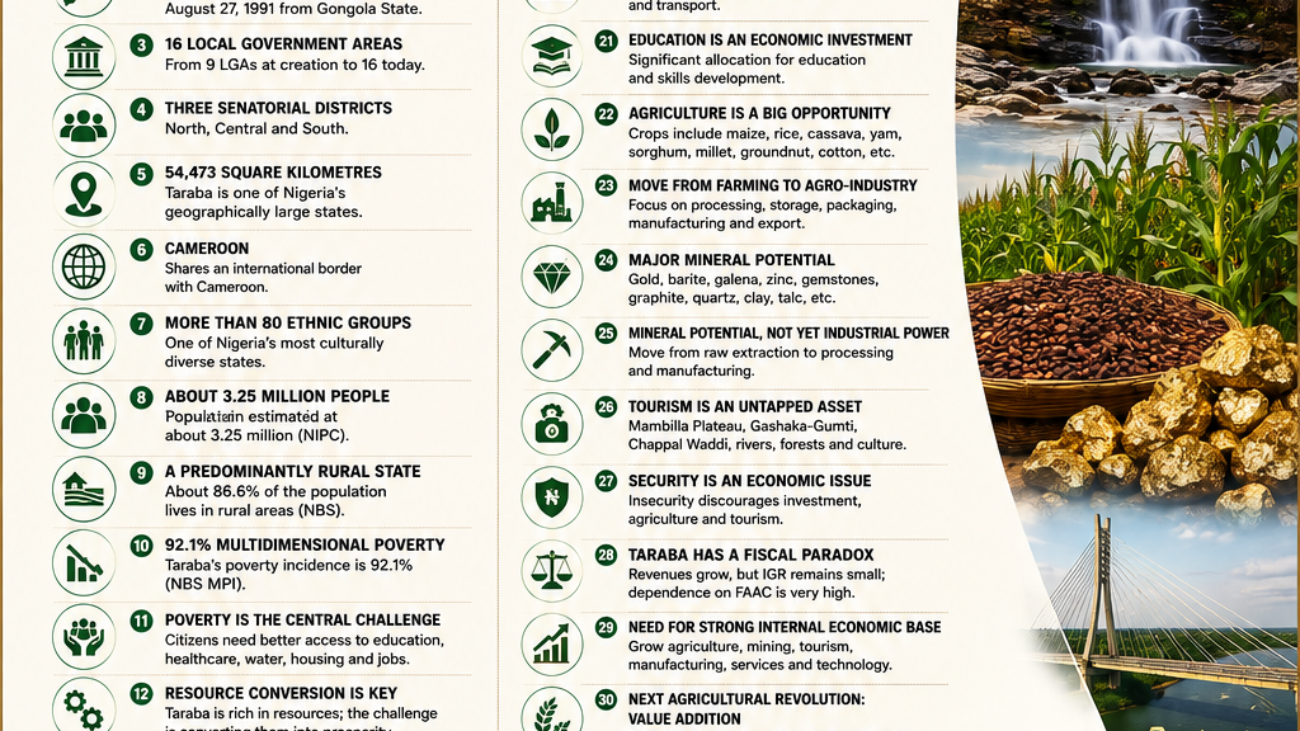
NewsNexus examines 35 numbers and realities that help tell the story of Taraba at 35.
1. 35 YEARS OF STATEHOOD
Taraba will mark 35 years as a state on August 27, 2026, providing an opportunity to assess its development journey beyond political rhetoric.
2. 1991 — THE YEAR TARABA WAS CREATED
Taraba State was created on August 27, 1991, from the former Gongola State.
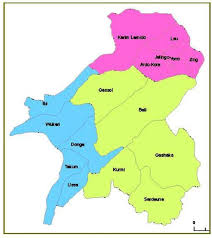
3. 16 LOCAL GOVERNMENT AREAS
The state has grown from nine LGAs at creation to 16 today: Ardo-Kola, Bali, Donga, Gashaka, Gassol, Ibi, Jalingo, Karim Lamido, Kurmi, Lau, Sardauna, Takum, Ussa, Wukari, Yorro and Zing.
4. THREE SENATORIAL DISTRICTS
Taraba is divided into North, Central and South senatorial districts, each with distinct geographical, economic and development characteristics.
5. 54,473 SQUARE KILOMETRES
INEC’s electoral data places Taraba’s land area at about 54,473 square kilometres, making its geographical size both an economic opportunity and a challenge for infrastructure delivery.
6. CAMEROON
Taraba shares an international boundary with Cameroon, giving the state potential advantages in cross-border trade, tourism, agriculture and regional commerce.
7. MORE THAN 80 ETHNIC GROUPS
Taraba is one of Nigeria’s most culturally diverse states, with more than 80 ethnic groups, making cultural diversity one of its major assets.
8. ABOUT 3.25 MILLION PEOPLE
The Nigerian Investment Promotion Commission’s state profile places Taraba’s population at approximately 3.25 million.
9. A PREDOMINANTLY RURAL STATE
Earlier NBS data estimated that about 86.6 percent of Taraba’s population was rural, underscoring the importance of rural infrastructure and agricultural development.
10. 92.1 PERCENT MULTIDIMENSIONAL POVERTY
The Nigeria Multidimensional Poverty Index recorded Taraba’s multidimensional poverty incidence at 92.1 percent. The figure captures multiple forms of deprivation rather than income alone.
11. POVERTY IS THE CENTRAL DEVELOPMENT CHALLENGE
The poverty statistics suggest that Taraba’s development debate must focus not only on government projects but on whether citizens have better access to education, healthcare, electricity, water, sanitation, housing and productive employment.
12. RESOURCE CONVERSION IS THE BIGGER CHALLENGE
Taraba is rich in land, water, agriculture, minerals, forests and tourism assets. The challenge is converting those resources into productive economic activity and improved living standards.
13. ₦16.06 BILLION IGR
Taraba generated approximately ₦16.06 billion in internally generated revenue in 2024, up substantially from about ₦4.16 billion in 2015.
14. 93.21 PERCENT FAAC DEPENDENCE
Despite IGR growth, gross FAAC accounted for approximately 93.21 percent of recurrent revenue in 2024, highlighting Taraba’s continuing dependence on federal transfers.
15. ₦220.58 BILLION FAAC
Taraba received approximately ₦220.58 billion in gross FAAC in 2024, compared with about ₦39.15 billion in 2015.
16. ₦249.02 BILLION TOTAL REVENUE
The state’s total revenue reached approximately ₦249.02 billion in 2024.
17. ₦224.73 BILLION CAPITAL EXPENDITURE
Taraba recorded approximately ₦224.73 billion in capital expenditure in 2024, underscoring the scale of public investment in infrastructure and development.
18. BIGGER BUDGETS DO NOT AUTOMATICALLY MEAN DEVELOPMENT
The real measure of public expenditure is not simply how much government spends, but what the expenditure produces in terms of infrastructure, productivity, jobs and improved living standards.
19. ₦653.53 BILLION 2026 BUDGET
Taraba’s approved 2026 budget is approximately ₦653.53 billion, reflecting the increasing scale of state government expenditure.
20. ROADS REMAIN CENTRAL TO DEVELOPMENT
Roads and transport accounted for a major share of the 2026 budget proposal. For a geographically large and predominantly rural state, roads are critical to agriculture, commerce, healthcare, education and security.
21. EDUCATION IS AN ECONOMIC INVESTMENT
Education and skills development received a significant allocation in the 2026 budget, reflecting the need to prepare Taraba’s young population for productive employment.
22. AGRICULTURE IS A MAJOR ECONOMIC OPPORTUNITY
Taraba produces crops including maize, rice, cassava, yam, sorghum, millet, groundnut, sugarcane and cotton. The bigger opportunity lies in processing these commodities into higher-value products.
23. TARABA MUST MOVE FROM FARMING TO AGRO-INDUSTRY
The state’s agricultural future should move beyond production towards aggregation, storage, processing, packaging, manufacturing and export.
24. TARABA HAS MAJOR MINERAL POTENTIAL
The state possesses deposits and occurrences of minerals including gold, barite, galena, zinc, gemstones, graphite, quartz, clay, talc, cassiterite and others.
25. MINERAL POTENTIAL HAS NOT YET BECOME INDUSTRIAL POWER
The major challenge is to move from extracting raw minerals to processing and manufacturing, thereby creating jobs, tax revenue and local value.
26. TOURISM IS ANOTHER UNTAPPED ECONOMIC ASSET
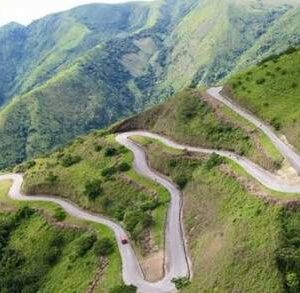
The Mambilla Plateau, Gashaka-Gumti National Park, Chappal Waddi, rivers, forests, mountains and cultural heritage give Taraba some of Nigeria’s strongest tourism assets.
27. SECURITY IS AN ECONOMIC ISSUE
Communal conflicts, farmer-herder tensions, kidnapping and other security challenges can undermine investment, agriculture, tourism and movement of goods and people.
28. TARABA HAS A FISCAL PARADOX
Government revenues and budgets have increased considerably, but the state’s own revenue remains small compared with federal transfers.
29. THE STATE NEEDS A STRONGER INTERNAL ECONOMIC BASE
The long-term goal should be to expand agriculture, manufacturing, services, tourism, mining, technology and other productive sectors so that more government revenue originates from economic activity within Taraba.
30. THE NEXT AGRICULTURAL REVOLUTION MUST BE ABOUT VALUE ADDITION
Taraba should seek to build complete agricultural value chains — from production to processing, manufacturing and export.
31. THE MINING REVOLUTION MUST GO BEYOND EXTRACTION
Gold, barite, gemstones and other minerals should become the foundation for processing and mineral-based industries rather than being exported or traded mainly in raw form.
32. TOURISM MUST BECOME AN INDUSTRY
Taraba’s natural attractions need investment in roads, accommodation, security, marketing, visitor services and conservation if tourism is to become a significant source of employment and revenue.
33. TARABA AT 35 HAS BUILT A FOUNDATION
Thirty-five years have produced political institutions, public infrastructure, educational and health facilities, growing budgets and a new generation of leaders. But the development transformation remains incomplete.
34. THE REAL QUESTION IS NOT WHAT TARABA HAS
Taraba already has land, water, minerals, agriculture, tourism attractions, a young population and strategic geography.
The real question is:
How much prosperity can Taraba create from what it already has?
35. WHAT WILL TARABA BECOME BY 2061?
As Taraba looks towards its 70th anniversary in 2061, the challenge is to transform its natural and human resources into measurable improvements in income, employment, infrastructure, education, healthcare and quality of life.
NEWSNEXUS ANALYSIS
Thirty-five years after its creation, Taraba’s story cannot accurately be described simply as one of success or failure.
It is a story of progress, potential and unfinished transformation.
The state has grown institutionally and financially. Its budgets are significantly larger than they were in the past. Its infrastructure has expanded. Its educational and healthcare institutions have increased. Its political system has matured.
Yet the poverty numbers remain deeply troubling, while dependence on federal transfers remains extremely high.
The central development challenge is therefore no longer discovering what Taraba possesses.
It is converting what Taraba possesses into wealth.
The state needs an economic model built around five interconnected pillars:
Agriculture → Agro-industry → Jobs → Revenue → Investment.
Minerals → Processing → Manufacturing → Exports.
Tourism → Investment → Jobs → Revenue.
Education → Skills → Productivity → Enterprise.
Infrastructure → Connectivity → Commerce → Economic growth.
If these connections are successfully established, Taraba can move from being known primarily as “Nature’s Gift to the Nation” to becoming a state where that natural wealth is translated into tangible prosperity for its people.
At 35, Taraba has the resources.
It has the people.
It has the geographical advantage.
It has the opportunity.
The unfinished task is to build the economic machinery capable of converting those advantages into prosperity.
Taraba at 35 is therefore not the end of a journey.
It is the beginning of the most important phase of the journey.
By Abraham Maina Joda
NewsNexus — Research | Media | Public Policy | Strategic Communications

Well articulate write up. If we can invest what you have itemized below and focus on capital project, the state will move from civil servant state industrial state, that the rate of unemployment will reduce to the nearest minimum.