



By Dr Rikwense Muri
Political movements are not merely campaign structures; they also communicate values. The names we give to such movements matter because they shape public perception, reflect our priorities, and speak to the kind of society we aspire to build.
As a supporter of the re-election of His Excellency, Dr. Agbu Kefas, I have no hesitation in identifying with platforms such as Kefasian Political Movement (K-Move), Village Boys 4 Kefas, City Boys Movement for Asiwaju and Kefas, and APC Youths Vanguard for Kefas etc. These are platforms I can proudly support because they mobilize citizens without inadvertently reinforcing social stigma.
However, I respectfully choose not to identify with or support the proposed “Street Boys for Starboy 2027” political movement.
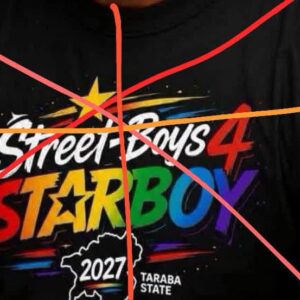
My position is not born out of political disagreement but from a conviction that the name contradicts the very philosophy that Governor Agbu Kefas has consistently promoted since assuming office.
One of the defining pillars of the Kefas administration has been the commitment to free and accessible education, alongside other youth-centred initiatives designed to reduce the number of children and young people forced onto the streets by poverty, neglect, or lack of opportunity. The Governor’s vision is to move children from the streets to the classroom, from vulnerability to opportunity, and from exclusion to productive citizenship.
Against this backdrop, celebrating or institutionalizing the identity of “street boys” as a political brand sends the wrong message. It risks normalizing a condition that public policy is working to eliminate. Rather than inspiring hope and transformation, it may unintentionally suggest that life on the streets is an acceptable political identity.
More importantly, the phrase “street boys” carries significant social baggage. Across Nigeria, it is often associated—fairly or unfairly—with homelessness, poverty, social exclusion, delinquency, or criminality. While many young people on the streets are victims of circumstances beyond their control, reducing them to a campaign label does little to address their real needs. It may even trivialize their struggles.
Street-connected children and youth deserve compassion, rehabilitation, education, skills acquisition, and economic opportunities—not political branding that turns their hardship into campaign symbolism.
A truly people-centred politics should restore dignity to the vulnerable rather than derive electoral value from their circumstances. If we genuinely care about young people on the streets, our focus should be on creating pathways that enable them to leave the streets permanently through education, vocational training, employment, mentorship, and social protection.
Supporting Governor Agbu Kefas should therefore mean advancing the ideals his administration represents. The strongest political message is not “Street Boys for Kefas,” but rather a movement that reflects transformation, empowerment, education, productivity, and responsible citizenship.
This is not a criticism of individuals who may have joined the movement in good faith. I respect their constitutional right to organize and support the Governor in ways they consider appropriate. My concern is solely with the symbolism of the name and the message it conveys.
As someone who believes in the Governor’s vision for a better Taraba State, I cannot support a political identity that appears inconsistent with his developmental agenda. I will continue to support Dr. Agbu Kefas and his re-election through platforms whose identity promotes hope, dignity, education, and youth empowerment.
Street Boys have nothing to do with politics because politics have failed them in the first instance. Our politics in Taraba State should never romanticize life on the streets. It should inspire every child on the streets to dream of a future in the classroom, in skilled employment, in entrepreneurship, and in leadership.
That, in my view, is the true spirit of the Kefas vision and the kind of politics worthy of our collective support.

Leave A Comment