

UMCN Peace Talk Challenges Stakeholders to Promote Reconciliation, Responsible Journalism and Peaceful Coexistence
JALINGO, TARABA STATE — August 28, 2026
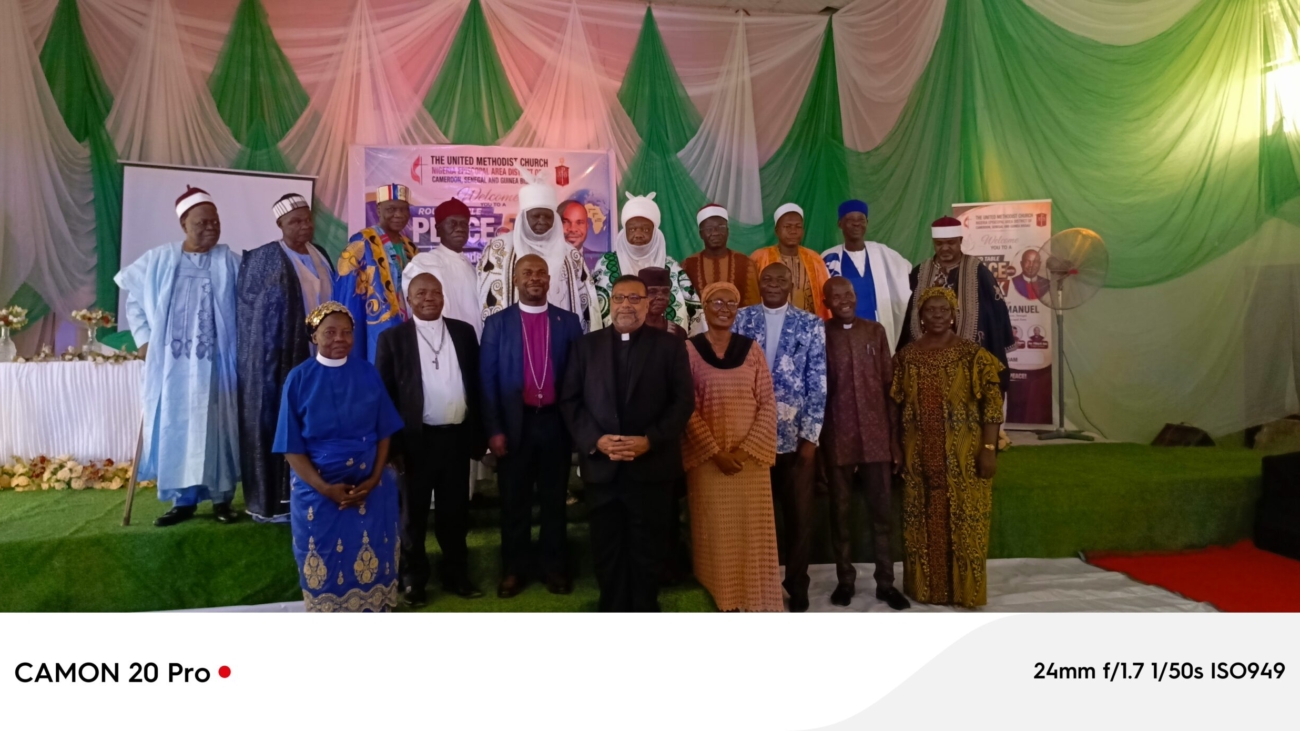
Religious leaders, traditional rulers, media practitioners and other stakeholders have been urged to embrace collective responsibility in promoting peace, reconciliation, unity and peaceful coexistence across Taraba State and Nigeria.
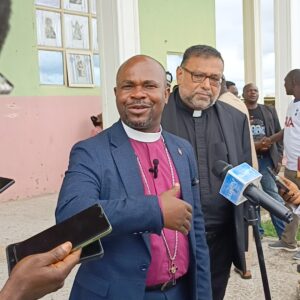
The call was made by Bishop Ande I. Emmanuel, Bishop of the United Methodist Church Nigeria Episcopal Area, at the Bishop’s Peace Talk and Media Interactive Session held at the Catholic Pastoral Centre, Mile Six, Jalingo.
The engagement, which marked the conclusion of a five-day Roundtable Peace Talk, was held under the theme “Promoting Peace, Reconciliation, Unity and Sustainable Conflict Transformation,” with a specific focus on “The Church, the Media and Our Collective Responsibility for Peace.”
Bishop Ande said peace cannot be achieved by the Church, government, media or any single institution alone, stressing that Christians, Muslims, traditional rulers, civil society, women, young people and the wider community all have critical roles to play.
“Peace cannot be built by Christians alone, Muslims alone, government alone, the media alone, or any single institution,” he said, describing peace as a shared human, national and sacred responsibility.
The Bishop particularly welcomed Muslim participants and called for stronger Christian-Muslim cooperation, urging religious leaders to make their churches and mosques platforms for dialogue, reconciliation and peaceful coexistence rather than division.
He also challenged journalists to recognise the power of their profession in shaping public perceptions and potentially influencing the direction of conflicts.
Bishop Ande urged the media to “verify before you amplify,” investigate claims, cross-check information, provide context and distinguish facts from allegations.
He warned against the spread of inflammatory and unverified information, particularly through social media, stressing that responsible journalism can serve as an important instrument for conflict prevention and peacebuilding.
According to him, journalists can contribute to peace by exposing injustice, identifying early warning signs, giving communities a voice and reporting stories of reconciliation, cooperation and successful community peacebuilding.
The Bishop also drew lessons from the United Methodist Church Nigeria’s own experience of internal conflict and reconciliation, noting that the Church’s journey demonstrated that damaged relationships can be restored through dialogue, trust-building and a genuine commitment to reconciliation.
He explained that conflict transformation must go beyond simply stopping violence. It must address the underlying grievances, mistrust, inequalities, exclusion, relationships and structures that sustain conflict.
Bishop Ande further called for stronger partnerships between religious institutions, traditional rulers, government, civil society and communities, while emphasising justice, good governance, education, employment, security and youth empowerment as essential components of sustainable peace.
He urged Nigerians to reject religious hatred, ethnic division, political violence, revenge and the misuse of social media.
The Bishop called on Tarabans to make Jalingo an example of Christian-Muslim coexistence, stressing that religious and ethnic differences should not be allowed to destroy the common humanity shared by citizens.
An international peace and conflict expert from the United States, Rev. Dr. Christie Neal, who served as the main facilitator, urged participants to put the knowledge and practical skills acquired during the five-day programme into practice in their churches and communities.
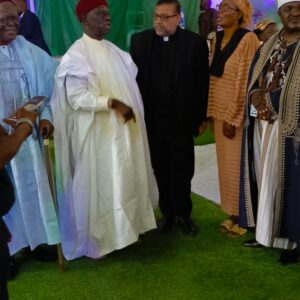
Traditional rulers at the event also reinforced the call for peaceful coexistence.
Speaking on behalf of traditional institutions, Kur Jibu Abubakar Mahmoud urged religious leaders to consistently educate their followers on dialogue and peaceful resolution of disputes.
Other traditional rulers present—including representatives from Lankaviri, Ivandza/Idza Jen, Pantis Lonyu, Mumuye, Sanwi and Nungku-Bwikwin chiefdoms—emphasised that Christianity, Islam and traditional religious values all promote peace and peaceful coexistence.
The Kpan Sanwi of Sanwi Chiefdom, HRH Dr. Pastor Haniel Batti, JP, also called for an attitudinal change among church leaders, urging them to demonstrate tolerance, reconciliation and responsible leadership.
The event featured interactive sessions, contributions from participants and the presentation of certificates to delegates who took part in the five-day programme.
NEWSNEXUS TAKE
The strongest message from the Jalingo engagement is that peace cannot be left to government and security agencies alone.
Bishop Ande’s challenge places particular responsibility on institutions that influence public opinion and community behaviour.
For the media, the message is especially significant: truthful reporting must not become a weapon for escalating conflict.
For religious institutions, peacebuilding must extend beyond sermons into practical engagement with communities.
And for traditional institutions, government, women and young people, peace must become a continuous community process rather than a response activated only after violence occurs.
The Jalingo Peace Talk ultimately offered a simple but powerful message to Taraba and Nigeria:
Different faiths can coexist. Different ethnicities can cooperate. Political differences need not become hatred. And disagreement does not have to end in violence.
As Bishop Ande urged participants, the task is not merely to talk about peace, but to become peacemakers.
NewsNexus — Research | Media | Public Policy | Strategic Communications

Leave A Comment