

Our state has the land, people, natural resources and strategic opportunities to build a prosperous economy. What we need now is the collective will to turn potential into production, investment and jobs.
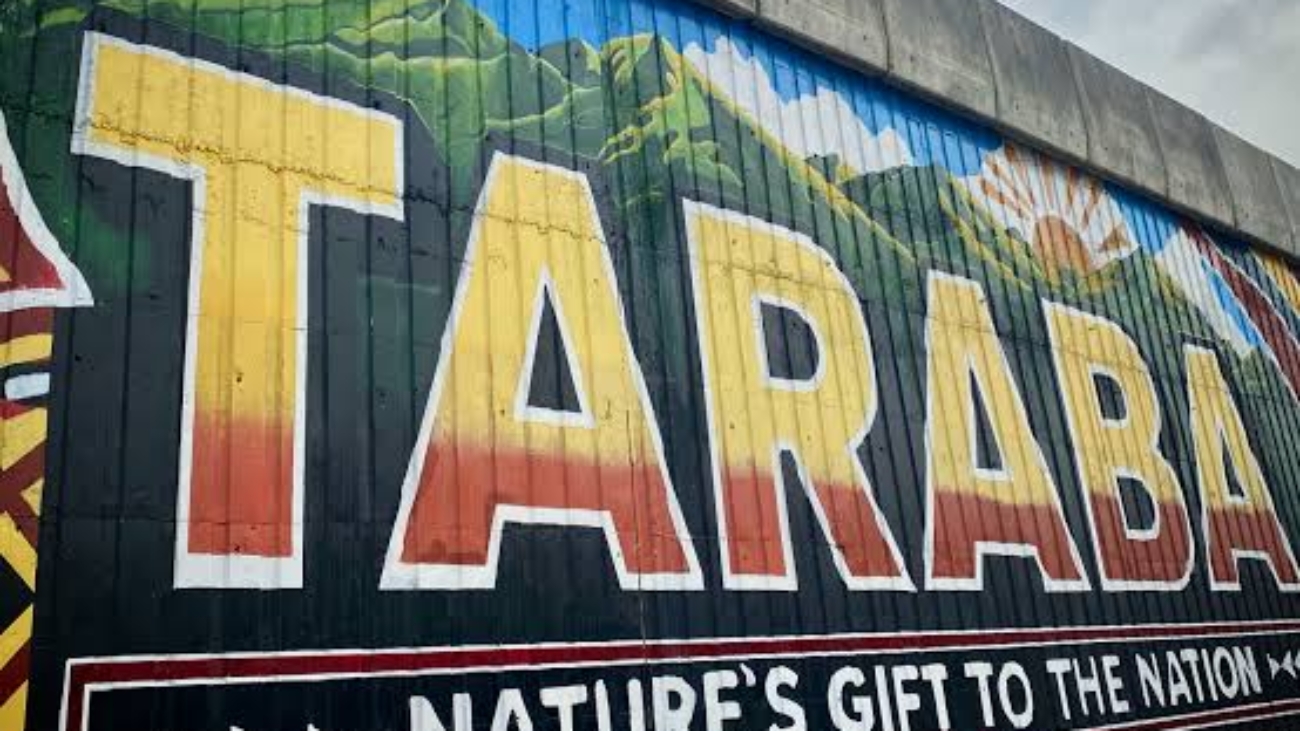
Taraba State is blessed with extraordinary possibilities.
From its fertile agricultural land to its forests, rivers, mountains, wildlife and solid minerals; from its rich cultural diversity to its young and increasingly educated population, the state possesses the ingredients required to build a strong and diversified economy.
But potential is not prosperity.
A state can have fertile land and still import food. It can have mineral resources and remain poor. It can possess breathtaking tourist attractions without developing a tourism economy. It can have talented young people while those same young people leave in search of opportunities elsewhere.
That is the challenge before Taraba.
The issue is no longer whether Taraba has potential. The evidence is everywhere.
The question is whether we are prepared to organise, invest and work differently enough to unlock it.
GOVERNMENT MUST PROVIDE THE FOUNDATION
Government has a critical responsibility.
Its role is not to do everything, but to create the conditions under which citizens and businesses can do more.
This means investing consistently in roads, electricity, water, education, healthcare, security and digital infrastructure.
It means creating policies that encourage investment rather than bureaucracy.
It means making government institutions more efficient, transparent and accountable.
Above all, government must think beyond individual projects and develop long-term economic strategies.
Agriculture is one example.
Taraba should not remain primarily a producer of raw agricultural commodities. We should increasingly seek to develop complete value chains — from farming to storage, processing, packaging, transportation and marketing.
The farmer should earn more.
The processor should create jobs.
The transporter should have business.
The investor should make a reasonable return.
And the state should benefit through employment, taxes and economic activity.
BUSINESS MUST SEE OPPORTUNITY
The private sector must also change the way it sees Taraba.
Taraba should not be viewed simply as a place where businesses come to seek government contracts.
It should be viewed as a market and an investment destination.
There are opportunities in agro-processing, logistics, hospitality, renewable energy, housing, healthcare, education, technology, tourism, manufacturing and responsible solid-mineral development.
Government cannot employ everyone.
The private sector must become a much larger engine of employment and wealth creation.
Tarabans in the diaspora also have an important role.
Capital, expertise and networks acquired outside the state can be brought home to build enterprises that create opportunities for others.
TOURISM SHOULD BECOME AN INDUSTRY
Taraba’s tourism potential deserves a more ambitious approach.
Our mountains, forests, wildlife, cultural heritage and natural landscapes are assets.
But an attraction does not automatically become a tourism industry.
It requires roads, security, accommodation, telecommunications, skilled hospitality workers, marketing and professional management.
Taraba must therefore move from simply celebrating its tourist attractions to commercialising them responsibly while protecting the environment and communities around them.
A visitor should be able to come to Taraba, move safely, stay comfortably, spend money and leave with a reason to return.
That is how tourism becomes an economic sector.
OUR GREATEST RESOURCE IS OUR PEOPLE
Ultimately, Taraba’s most valuable resource is not beneath the soil.
It is above it.
Our people are our greatest resource.
Education must therefore remain central to the state’s development strategy.
But education must also respond to the economy.
We need graduates, but we also need technicians, artisans, agricultural specialists, software developers, healthcare professionals, teachers, entrepreneurs and skilled workers.
Technical and vocational education should be treated as an essential component of economic development rather than an alternative for those who cannot attend university.
Every young Taraban who acquires a useful skill represents another potential business, employer and contributor to the state’s economy.
CITIZENS CANNOT BE SPECTATORS
Development is not solely the responsibility of government.
Citizens have responsibilities too.
We must pay legitimate taxes and rates. We must protect public infrastructure. We must support legitimate businesses. We must reject vandalism and the destruction of public property.
And perhaps most importantly, we must demand accountability based on facts.
Citizens should ask governments simple but important questions:
What was promised? What was budgeted? What was delivered? What changed?
That is not opposition.
That is citizenship.
LET DEVELOPMENT RISE ABOVE POLITICS
Taraba needs a development conversation that is bigger than political parties and election cycles.
Governments will change.
Political parties will change.
Leaders will come and go.
But Taraba remains.
A successful agricultural programme should not disappear simply because the administration that introduced it has left office.
A useful road should not become irrelevant because it was constructed by another political party.
A successful education reform should be strengthened rather than abandoned.
Development should belong to the people, not to political parties.
FROM POTENTIAL TO PERFORMANCE
The Taraba we desire will not emerge from slogans alone.
It will require vision from government, capital from business, innovation from entrepreneurs, skills from our young people, responsibility from citizens and accountability from public institutions.
We must stop measuring progress merely by the number of projects announced.
We should measure outcomes.
How many jobs were created?
How many businesses were established?
How much agricultural production increased?
How much investment came into Taraba?
How many children gained access to quality education?
How much local value was created from our natural resources?
How much did household incomes improve?
These are the measurements that matter.
Taraba does not lack potential.
What we must build is the system capable of converting that potential into sustained prosperity.
The opportunity is enormous.
But opportunities do not wait forever.
This is our land. These are our resources. These are our people.
The responsibility to build the Taraba we want belongs to all of us.
Government must lead. Business must invest. Citizens must participate. And all of us must demand results.
The future of Taraba should not remain a promise.
It should become a project we collectively build.
— NEWSNEXUS EDITORIAL BOARD
Where Facts Matter

Leave A Comment