

How dual royal lineage, education, public service and community leadership are shaping the reign of the 11th Murum Mbula
By Abraham Maina Joda
There are traditional institutions whose stories are written largely in the language of ancestry. There are others whose contemporary chapters are shaped as much by education, public service and the changing expectations of their people.
The story of His Royal Majesty, Murum Bwaltam Barsu Bentley Biyapo, Mboiman II, the 11th Murum Mbula, sits at an interesting intersection of both.
Born on 19 September 1975, Biyapo’s journey to the throne was not a straightforward passage from palace to crown. It was shaped by education across continents, professional service, community engagement and a career in the public sector before destiny eventually placed him at the centre of the Mbula traditional institution.
His story is also unusual in another respect: according to the monarch, his royal lineage connects him to both recognised ruling families of the Mbula Kingdom — the Muzong and Fwa families. His mother belonged to the other ruling clan, giving him what may appropriately be described as a dual royal heritage.
That lineage, however, is only one part of the story.
The larger question is what happens when a man whose formative years were shaped by formal education and public service inherits a traditional institution with a long historical memory — and how that institution adapts to the demands of contemporary society.
For Biyapo, the answer appears to be evolving through community mobilisation, traditional diplomacy, institutional expansion and an attempt to connect the authority of the throne with the practical concerns of the people.
—
THE MAN BEHIND THE CROWN
Long before the royal regalia, there was a young Mbula man whose life was taking shape through education and professional ambition.
Biyapo’s early secondary education took him to Moscow in the former Union of Soviet Socialist Republics (USSR). He later returned to Nigeria and joined Federal Government College, Wukari, entering at the Senior Secondary School One level.
The experience gave him exposure to different educational environments and broadened the horizons of a young man who would eventually become a traditional ruler.
His academic journey continued after secondary school.
He obtained a Bachelor of Technology in Agricultural Economics and Extension in 2008, followed years later by a Master’s degree in Agricultural Extension and Rural Sociology in 2019.
But education for Biyapo was not merely a personal pursuit.
His student years were also marked by leadership. In 2006, he served as President of the Mbula Students’ Union, an early indication of the community-oriented leadership role that would later become central to his public life.
—
FROM AGRICULTURE TO PUBLIC SERVICE
After his studies, Biyapo’s professional journey took him through several areas of public service.
His experience included work with the Upper Benue River Basin Development Authority, the Gerio Road Rehabilitation Project, and the Adamawa State Post-Primary Schools Management Board.
He also served during the National Youth Service Corps programme at Igwuruta Community Secondary School in Rivers State.
The diversity of these experiences exposed him to agriculture, infrastructure, education and public administration — sectors that would later intersect with the responsibilities of traditional leadership.
For a traditional institution operating in an era when communities increasingly expect their leaders to understand government, development and public policy, such experiences can be significant.
—
THE ROAD SAFETY YEARS
One of the defining chapters of Biyapo’s professional life was his career with the Federal Road Safety Corps.
His service took him through different locations, including Azare, Girei and Yola, and he eventually rose to the position of Route Commander.
He was also associated with the National Vehicle Identification Scheme.
The discipline of road safety administration — with its emphasis on regulation, public order, mobility and enforcement — provided another dimension to his professional formation.
By the time he eventually assumed the traditional throne, he was therefore not coming into leadership solely from a ceremonial background. He brought with him years of experience in structured institutions and public service.
—
THE KINGDOM BEHIND THE CROWN
To understand Biyapo’s reign, however, one must first understand the institution he inherited.
The Mbula Kingdom carries a historical narrative rooted in migration, settlement, clan identity, traditional authority and relationships that extend across present-day administrative boundaries.
Oral traditions and historical accounts have preserved different versions of the Mbula people’s movement and settlement, including narratives associated with Tambo and the wider history of the people.
As with many African societies whose histories were preserved through oral traditions before extensive written documentation, some details differ across accounts.
What remains central is the enduring identity of the Mbula people and the traditional structures through which that identity has been maintained.
—
THE CLANS AND THE ROYAL HOUSES
At the heart of the institution is the relationship between the royal houses.
The Muzong and Fwa families occupy an important place in the succession history of the Mbula traditional institution.
It is within this context that Biyapo’s own background assumes particular significance.
According to the monarch, his royal heritage comes from both ruling clans. His father and mother connect him to the two recognised royal families, giving him a lineage that crosses the traditional divide between the houses.
This dual connection became an important part of his personal identity as he moved from prince to monarch.
—
WHAT DOES “MURUM” REPRESENT?
The title Murum is more than a name attached to a traditional ruler.
It represents authority, continuity and responsibility within the Mbula traditional system.
A Murum is expected to preserve the memory of the people while also providing leadership in the present.
That balance has become increasingly important as traditional institutions across Nigeria operate alongside elected governments, modern local administration, civil society and increasingly mobile populations.
The contemporary traditional ruler is therefore required to navigate two worlds: the authority of history and the realities of modern governance.
—
THE JOURNEY TO THE THRONE
Biyapo emerged as the 11th Murum Mbula in 2021, succeeding Murum Joram Joel Fwa, the 10th Murum Mbula.
His selection was announced on 12 July 2021, marking the beginning of a new chapter in the institution’s history.
His emergence occurred within the broader context of succession debates that had surrounded the throne.
Traditional succession can be deeply emotional because it involves ancestry, clan identity, historical precedent and community expectations.
For that reason, the transition to a new Murum was not simply the appointment of an individual. It represented the continuation of an institution whose legitimacy is closely connected to the history of the Mbula people.
—
THE STAFF OF OFFICE
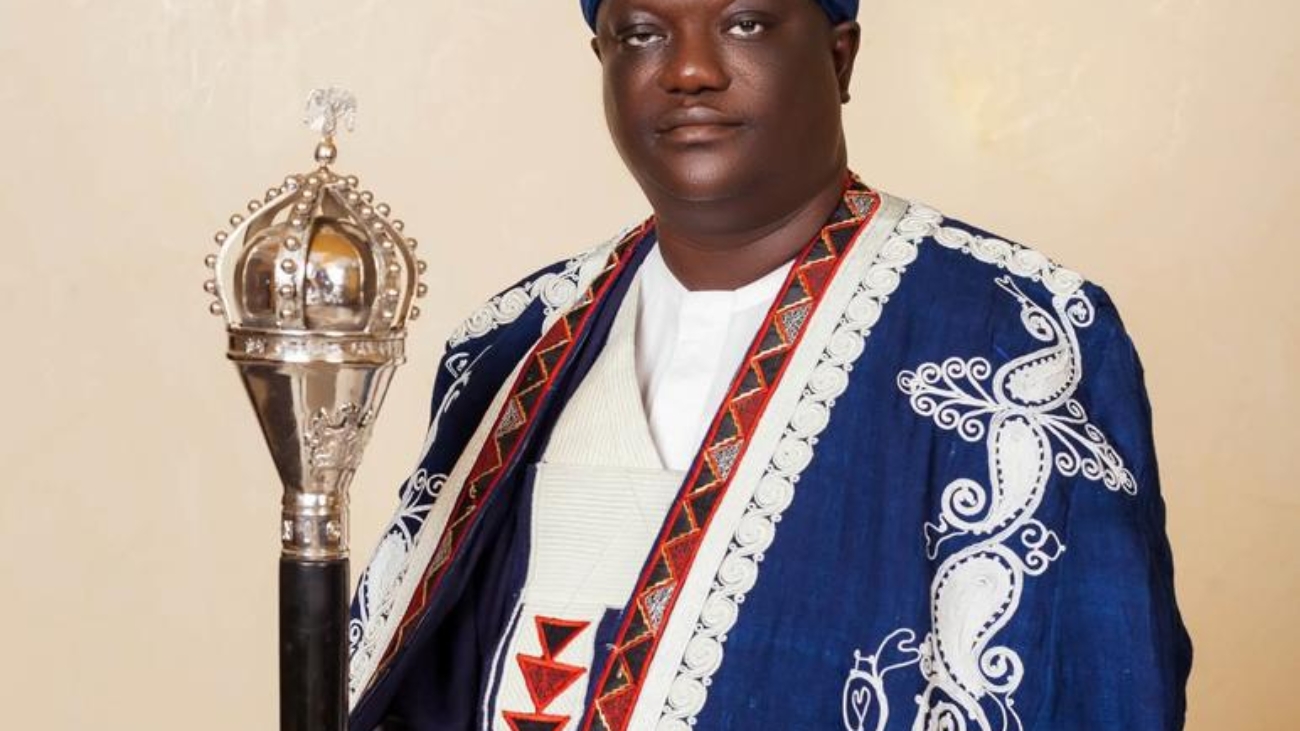
On 23 December 2021, Biyapo formally received the Staff of Office, further institutionalising his reign as the 11th Murum Mbula.
The ceremony represented more than the presentation of a symbol of authority.
For the palace and the people, it marked the formal transition from selection to recognised traditional leadership.
—
FROM THREE DISTRICTS TO ELEVEN
Perhaps one of the most significant developments associated with the Biyapo reign has been the expansion of the traditional district structure.
According to the monarch, when he assumed the throne, he met three traditional districts.
With the approval of Governor Rt. Hon. Ahmadu Umaru Fintiri, he subsequently created eight additional districts, bringing the total to eleven.
The monarch explained that the expansion was intended to improve the reach of traditional leadership and engage what he described as previously “ungovernable spaces.”
The development is significant because traditional institutions often serve as the first point of cultural and community contact for populations that may live far from formal government structures.
The expansion therefore represents an attempt to bring the institution closer to the people while creating additional layers of traditional engagement.
—
A THRONE WITH A DEVELOPMENT AGENDA
Biyapo’s background in agricultural economics, rural sociology and public administration has also influenced the way his leadership is perceived.
Education and community development have featured prominently in the broader activities associated with his reign.
The challenge is substantial.
Many traditional communities face questions around youth unemployment, education, rural development, cultural preservation, migration and access to government programmes.
A modern traditional institution cannot directly replace elected government, but it can mobilise communities, preserve social cohesion and provide a bridge between citizens and public institutions.
That appears to be one of the spaces in which the Murum Mbula institution under Biyapo is seeking relevance.
—
NNOMA-JHAR: RECLAIMING A SHARED IDENTITY
One of the cultural initiatives associated with the current era is the Nnoma-Jhar National Day, which brought together Mbula communities around a shared cultural identity.
The April 2025 gathering in Borrong was particularly significant because Mbula communities extend beyond a single contemporary administrative boundary.
Communities in Adamawa and Bauchi were part of the wider cultural conversation.
The initiative reflects a broader reality: traditional identities frequently predate the boundaries created by modern states and local government areas.
For a traditional institution, maintaining those cultural connections can become an important instrument of unity.
—
TRADITIONAL DIPLOMACY IN A MODERN NIGERIA
The role of the Murum also extends beyond the immediate palace environment.
In March 2024, the monarch’s engagement with the National Drug Law Enforcement Agency in Abuja reflected one aspect of traditional leadership’s interaction with national institutions.
Such engagements demonstrate how traditional rulers can use their platforms to participate in conversations around issues affecting communities.
Traditional diplomacy is no longer confined to meetings among chiefs and neighbouring communities.
It increasingly involves government agencies, development organisations, professional bodies and national institutions.
—
THE 2025 MBULA NATIONAL DELEGATES CONFERENCE
Another important moment came with the 2025 Mbula National Delegates Conference, held under the theme:
“Repositioning the Mbula Nation for Sustainable Development.”
The choice of theme was itself revealing.
It suggested a conversation that went beyond cultural preservation towards questions of development, organisation and the future of the people.
For a traditional institution, such a conversation is increasingly unavoidable.
Culture provides identity, but sustainable development requires institutions, education, economic opportunity and organised community participation.
—
THE ECONOMIC QUESTION
The future of the Mbula Kingdom, like that of many traditional communities, cannot be separated from the economic realities facing its people.
Agriculture remains important to the livelihoods of many communities.
The question is how traditional leadership can help create an environment in which agriculture, education, enterprise and human capital development become stronger foundations for the next generation.
This is where Biyapo’s academic background in agricultural economics and extension becomes particularly relevant.
His professional history gives him a perspective that combines traditional authority with an understanding of rural development.
Whether that perspective can ultimately translate into measurable economic transformation remains one of the long-term questions of his reign.
—
THE LEGACY OF J.J. FWA
Every new reign inherits the achievements, expectations and unresolved questions of the previous one.
Biyapo succeeded Murum Joram Joel Fwa, whose tenure forms part of the institutional history against which the current reign will inevitably be assessed.
The responsibility of the 11th Murum is therefore not simply to begin anew.
It is to preserve what remains valuable, correct what requires improvement and create room for the institution to evolve.
That is the nature of traditional succession: continuity without necessarily remaining static.
—
BETWEEN HISTORY AND MODERNITY
The Biyapo reign is unfolding at a time when traditional institutions occupy an increasingly complex space in Nigerian society.
Traditional rulers do not exercise the constitutional powers of elected governments, yet their influence in matters of identity, mediation, community mobilisation and cultural preservation remains significant.
The Murum Mbula institution is consequently faced with the challenge of remaining authentically Mbula while responding to a rapidly changing social environment.
For Biyapo, that challenge is particularly interesting because his own life embodies the intersection.
He is a prince shaped by two royal houses.
He is a scholar with an academic background in agriculture and rural sociology.
He is a former public servant and road safety commander.
And he is now the custodian of an institution whose history stretches far beyond his own lifetime.
—
THE ROAD AHEAD
The most important test of any traditional reign is ultimately not the ceremony surrounding the throne, but the legacy left behind.
For the 11th Murum Mbula, the road ahead will involve maintaining unity among the different communities of the Mbula people, strengthening traditional institutions, preserving cultural identity and supporting initiatives capable of improving the lives of ordinary people.
The expansion from three to eleven traditional districts represents one structural intervention.
The Nnoma-Jhar initiative represents a cultural intervention.
Engagement with government agencies and national institutions represents another dimension.
But the larger test will be whether these initiatives can mature into institutions and programmes that outlive individual personalities.
—
THE MAN, THE MONARCH AND THE MOMENT
HRM Murum Bwaltam Barsu Bentley Biyapo’s journey from prince to Murum Mbula is ultimately a story about more than succession.
It is a story about a man whose life moved through Moscow, Wukari, university classrooms, agricultural institutions, public service and the Federal Road Safety Corps before returning to the traditional institution into which he was born.
It is also a story about identity.
His connection to both the Muzong and Fwa ruling families gives his personal history an unusual place within the succession narrative of the Mbula Kingdom.
But the crown has transformed that personal heritage into a public responsibility.
The 11th Murum Mbula now stands at the intersection of history and the future.
Behind him is a kingdom shaped by migration, memory, clans and generations of traditional leadership.
Ahead lies a more demanding question:
How can an ancient institution remain relevant to a modern generation without losing the identity that made it worth preserving in the first place?
The answer will ultimately form the most important chapter of the Biyapo reign.
—
NEWSNEXUS PROFILE
Name: HRM Murum Bwaltam Barsu Bentley Biyapo, Mboiman II
Date of Birth: 19 September 1975
Position: 11th Murum Mbula
Royal Lineage: Muzong and Fwa ruling families
Academic Background: B.Tech Agricultural Economics and Extension; M.Sc Agricultural Extension and Rural Sociology
Former Profession: Public servant / Federal Road Safety Corps officer
Selected as Murum Mbula: July 2021
Staff of Office: 23 December 2021
Predecessor: Murum Joram Joel Fwa
Traditional Districts at Ascension: 3
Current Traditional Districts: 11
Additional Districts: 8, created with the approval of Governor Rt. Hon. Ahmadu Umaru Fintiri
Major Cultural Initiative: Nnoma-Jhar National Day
Community Focus: Cultural identity, traditional institution, community mobilisation and sustainable development
EDITOR’S NOTE
This profile incorporates biographical and institutional clarifications supplied directly by HRM Murum Bwaltam Barsu Bentley Biyapo. Historical sections concerning the origins, migration and succession traditions of the Mbula people are presented with appropriate caution, recognising that parts of such histories are preserved through oral traditions and may contain differing accounts.
NewsNexus Editorial Desk has sought to distinguish the monarch’s direct biographical clarifications from broader historical narratives rather than presenting disputed historical details as settled fact.

Leave A Comment