



With major investment in mechanisation, farm estates, rural roads and access to major markets, Kefas administration’s agricultural strategy enters a critical implementation phase
By Abraham Maina Joda
For decades, Taraba State has carried one of Nigeria’s most obvious agricultural paradoxes: enormous agricultural potential, vast arable land and a predominantly agrarian population, but inadequate infrastructure and mechanisation that have limited the ability to convert that potential into sustained commercial prosperity.
The latest development under the Taraba Agricultural Transformation and Rural Development Scheme, TAARDS, could represent an important attempt to change that equation.
On Friday, October 2, 2026, the Taraba State Government, the 16 Local Government Councils and Origin Tech Group Limited signed a tripartite Memorandum of Understanding for the Rural Roads Development Component of TAARDS.
Under the arrangement, between 10 and 20 kilometres of concrete rural roads are expected to be developed in each Local Government Area, with the roads targeted at connecting economically viable rural communities, farms, aggregation centres and markets.
If implemented as planned, the significance of the project could extend far beyond road construction.
It could provide the physical infrastructure required to make large-scale mechanised agriculture commercially viable across Taraba.
CONNECTING THE PIECES OF THE AGRICULTURAL PUZZLE
TAARDS has been conceived around two mutually reinforcing components: agricultural transformation and rural roads development.
The agricultural component focuses on large-scale production, farm estates, irrigation, mechanisation, aggregation, processing and market development, while the roads component is designed to provide the connectivity required to move farmers, inputs and agricultural produce between farms, communities, processing centres and markets.
That connection is critical.
A tractor can increase the amount of land a farmer cultivates. A combine harvester can reduce harvesting time. Irrigation can extend production beyond the rainy season.
But without roads, the economics can still break down.
Produce can remain stranded in rural communities. Transportation costs can rise. Perishable commodities can deteriorate before reaching consumers. Farmers can lose access to profitable markets.
This is why the rural roads component could ultimately prove to be one of the most consequential parts of TAARDS.
THE MACHINES BEHIND THE AGRICULTURAL AMBITION
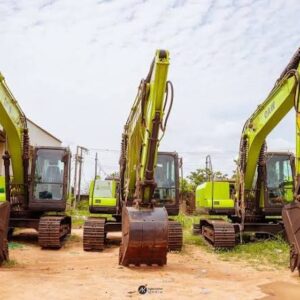
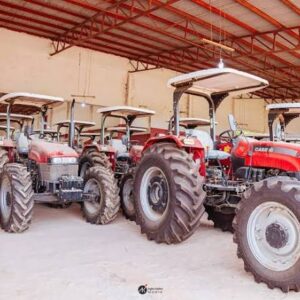
The road announcement comes against the background of the state’s substantial investment in agricultural and heavy-duty machinery.
The Taraba State Government has announced the procurement of 120 agricultural and heavy-duty machines under TAARDS. According to the government, the fleet comprises 30 tractors, 30 combine harvesters, 40 boom sprayers, five 30-tonne tippers, five excavators, eight bulldozers and two payloaders. The equipment is intended to support land clearing, cultivation, harvesting, irrigation support, road construction and other agricultural activities.
That investment is significant because the equipment is designed to address different stages of the agricultural value chain.
The tractors support cultivation.
The combine harvesters support large-scale harvesting.
The boom sprayers support crop management.
The excavators, bulldozers, tippers and payloaders can support land preparation and rural infrastructure development.
In other words, TAARDS is not relying on one category of intervention.
It is attempting to build an agricultural production system.
WHAT NEWSNEXUS PHYSICALLY VERIFIED
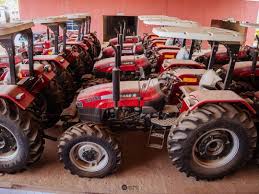
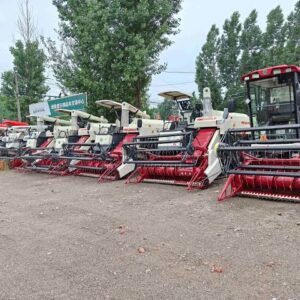
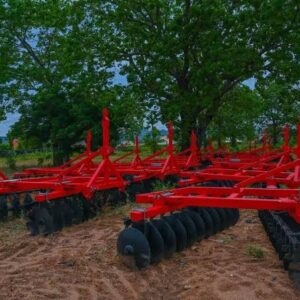
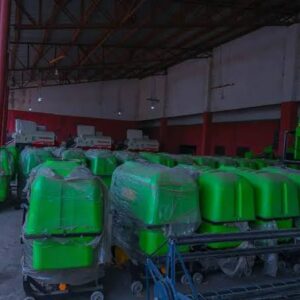
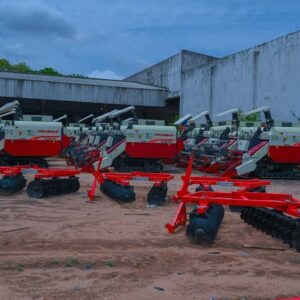
In June 2026, NewsNexus went beyond official announcements and conducted an on-the-spot inspection at the Dr. Agbu Kefas Agricultural Mechanization Project within the TSTC Yard in Jalingo.
The NewsNexus team physically inspected and documented agricultural and heavy-duty equipment at the facility through photographs and video recordings.
The June inspection confirmed the physical presence of:
- 5 HOWO tippers
- 8 bulldozers
- 3 wheel loaders
- 5 excavators
- 26 tractors
- 40 combine harvesters
- 40 boom sprayers
- 30 ploughs and harrows
- 5 tractor trailers
The inspection therefore provided a documented physical snapshot of a substantial mechanisation fleet in Taraba.
There is an important distinction between this NewsNexus verification and the government’s broader procurement figure.
The June inspection was not an audit of the entire TAARDS procurement. It documented equipment physically present at the Jalingo facility at the time of the visit.
The government subsequently/publicly reported a 120-machine procurement with a breakdown that differs from the NewsNexus physical count.
The two sets of figures should therefore not be treated as contradictory inventories without further documentation. Equipment may have been delivered at different times, deployed to other locations, or been part of different stages of the programme.
What NewsNexus can establish from its June inspection is straightforward:
The machines listed above were physically present at the Jalingo facility when the inspection was conducted.
A JUNE SNAPSHOT — NOT A CURRENT INVENTORY
It is equally important to stress that the NewsNexus inspection took place in June 2026.
The report is being revisited in October because of the latest TAARDS developments.
Consequently, the June figures should not be interpreted as the current inventory of equipment in Taraba.
Additional equipment may have arrived since June. Some machines may have been deployed to farms, construction sites or other locations.
The June report therefore remains a documented snapshot of what NewsNexus physically observed at that time.
COULD THIS BE THE BIGGEST AGRICULTURAL EQUIPMENT INVESTMENT IN 35 YEARS?
There are reports circulating that the current scale of investment in agricultural equipment could represent the largest such investment in Taraba State since its creation 35 years ago in 1991.
NewsNexus has not independently confirmed this historical claim.
It should therefore be treated as an unverified report rather than an established fact.
Confirmation would require a review of historical state budgets, procurement records and agricultural investment data covering the state’s 35-year history.
If eventually established, however, it would place the current TAARDS mechanisation programme in significant historical context.
What can be established is that the state has publicly announced a 120-machine procurement under TAARDS, involving tractors, harvesters, sprayers and heavy-duty equipment.
The more important question, however, is what the equipment ultimately produces.
Machines sitting idle do not constitute an agricultural revolution.
Machines deployed efficiently to expand cultivated land, increase yields, reduce harvesting losses and support rural infrastructure can.
FROM MACHINES TO ROADS
This is where Friday’s rural roads MoU becomes particularly important.
The equipment and roads components can potentially reinforce each other.
Agricultural machinery creates production capacity.
Farm estates create scale.
Rural roads create access.
Aggregation centres create collection points.
Processing facilities create value addition.
Markets create demand.
The resulting economic chain is potentially powerful:
Land → Mechanisation → Production → Rural Roads → Aggregation → Processing → Markets → Jobs → Revenue.
This is fundamentally different from treating agriculture simply as the distribution of farm inputs.
It is an attempt to build an agricultural economy.
THE ROAD FROM FARM TO MARKET
Governor Agbu Kefas, while signing the MoU, stressed that increased agricultural production without reliable access roads could leave farmers burdened by high transportation costs, post-harvest losses and restricted access to markets.
That is perhaps the central economic argument behind the rural roads component.
A rural road is not merely a transportation project when it connects a productive agricultural area to a major market.
It becomes part of the agricultural production system.
For farmers in remote communities, a functional road can reduce the cost and time involved in moving fertiliser, seeds, machinery and labour into production areas and transporting harvested commodities out.
For processors and investors, connectivity can make previously inaccessible agricultural locations commercially attractive.
For government, it can expand the economic footprint of rural communities.
OPENING UP KARIM-LAMIDO AND OTHER AGRICULTURAL FRONTIERS
The emphasis placed by Governor Kefas on opening up areas such as Karim-Lamido illustrates the wider geographical ambition of the project.
Taraba’s agricultural potential is spread across its 16 Local Government Areas and three senatorial zones.
A successful rural connectivity programme could therefore have consequences beyond the individual roads being constructed.
It could open new agricultural frontiers, strengthen rural economies and connect communities that have historically remained distant from major commercial centres.
THE PRODUCE-FOR-LAGOS VISION
The broader vision of producing agricultural commodities for major Nigerian markets, including Lagos, gives TAARDS another dimension.
The challenge for Taraba is not simply whether it can produce food.
The bigger question is whether the state can produce at sufficient scale and consistency, aggregate the output efficiently, process where necessary and move commodities competitively to major markets.
That is where roads, mechanisation, storage, aggregation and processing become interconnected.
If the system works, Taraba could increasingly move from selling agricultural potential to selling agricultural output.
THE ₦200 BILLION ROAD QUESTION
Information provided following Friday’s signing indicates that about ₦200 billion in financing has been secured for implementation of the rural roads component.
Governor Kefas also stated that agricultural equipment worth ₦16 billion had been procured and paid for by the state government.
These figures remain matters that should continue to be documented and scrutinised as implementation progresses.
The most important questions are ultimately not the headline figures but what happens on the ground.
How many kilometres of roads will actually be completed?
Which communities and farms will they connect?
How much will transportation costs fall?
How much additional farmland will become commercially accessible?
How much agricultural output will be generated?
How many jobs will be created?
And, most importantly, will farmers actually earn more from their production?
Those are the measurements that will determine whether TAARDS becomes transformational.
FROM GOVERNMENT PROJECT TO ECONOMIC SYSTEM
Nigeria has no shortage of agricultural programmes.
The challenge has often been connecting policy announcements to functioning economic systems.
TAARDS is attempting something more ambitious.
It is bringing together agricultural land, mechanisation, rural infrastructure, production, aggregation, processing and markets within one broad framework.
The involvement of the 16 Local Government Councils is also significant because local governments are closest to the communities and are expected to help identify priority roads, facilitate community participation and support implementation.
For Origin Tech Group, the challenge will be delivering the infrastructure to the required technical and financial standards.
For the state government, the challenge will be ensuring transparency, affordability, proper oversight and long-term maintenance.
For Local Government Councils, the challenge will be ensuring that road selection reflects genuine economic priorities.
And for farmers, the ultimate test will be whether the programme makes agriculture more productive and profitable.
COULD THIS BE TARABA’S AGRICULTURAL GAME CHANGER?
It is too early to declare TAARDS a success.
The major projects are still moving from agreements into implementation, and the real economic impact will only become measurable as roads are constructed, farms become operational, equipment is deployed and agricultural output begins to move through the proposed value chains.
But the architecture of the programme is significant.
Taraba already possesses enormous agricultural potential.
What has historically constrained that potential is the ability to organise production at scale, provide modern equipment, connect rural communities and move agricultural commodities efficiently to markets.
TAARDS is designed to address several of those constraints simultaneously.
If the roads are built as planned, the farm estates become productive, the machinery is efficiently deployed, aggregation and processing facilities function effectively and farmers are integrated into the value chain, the programme could mark a major shift in Taraba’s agricultural economy.
The real revolution, therefore, may not be the tractors alone.
It may not be the farm estates alone.
And it may not be the roads alone.
The potential game changer is the connection of all three into one functioning agricultural economy.
For a state that has spent 35 years searching for ways to fully convert its agricultural endowment into broad-based economic prosperity, TAARDS could become one of the most consequential agricultural experiments in its history.
But the verdict will not be determined by speeches, machines or MoUs.
It will be determined in the farms.
It will be determined on the roads.
It will be determined in the markets.
And ultimately, it will be determined by whether Taraba’s farmers become more productive, more connected and more prosperous.
NewsNexus — Where Facts Matter

Leave A Comment