


By Dr. Isa Mohammed
Your Excellency,
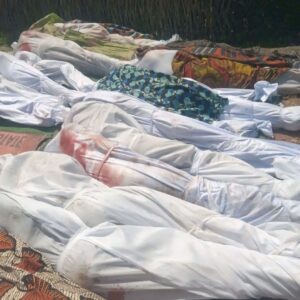
I respectfully write this letter with a profound sense of urgency, grief, and civic responsibility concerning the Binnari killings, which underscore the gravity of the deteriorating security situation in Karim Lamido Local Government Area of Taraba State. This letter seeks to amplify the voices of innocent citizens who continue to suffer and lose their lives to violence. These are voices that may not have reached Your Excellency.
Your Excellency, the security situation in Taraba State has improved in certain respects since your assumption of office in 2023. These gains have been attributed to deliberate security measures and your experience as a retired military intelligence officer. The people of Taraba State appreciate the efforts made by your administration to improve security and protect lives and property.
1. Security Dynamics in Taraba State
The security situation in Taraba State is complex due to its vast geographical landscape, dense forests, ethnic diversity, and high levels of poverty in some communities. These challenges are further compounded by the broader security crisis in Nigeria, particularly in neighbouring states such as Benue, Plateau, Bauchi, Gombe, and Adamawa.
These factors make it necessary to adopt a comprehensive, intelligence-driven, and community-centred approach to security management in Taraba State.
2. Karim Lamido: A Frontline of Conflicts
Karim Lamido Local Government Area is strategically important because of its vast landmass, geographical location, ethnic diversity, fertile agricultural land, and sizeable population. These attributes make it attractive for investment and economic development. However, they also present security challenges, as criminal groups, bandits, and kidnappers exploit the area’s terrain and other vulnerabilities to perpetrate violence against innocent citizens. Karim Lamido, with an area of 6,620 km2, is bigger than many countries in the world. For instance, Brunei (5,675 Km2) or Cape Verde (4,005 Km2). It is very big and wide. Karim Lamido remains one of the food-producing areas of Taraba State and deserves adequate protection.
A conflict analysis of the area reveals several overlapping forms of conflict occurring simultaneously. These include land disputes, chieftaincy disputes and competing claims, farmer-herder clashes, ethnic conflicts, intercommunity disputes, intra-religious clashes, and political conflicts. These conflicts differ in their causes, intensity, and duration. While some are manageable through dialogue and mediation, others are deeply rooted and require sustained institutional and security interventions.
At present, there are reportedly seventeen military deployments in Karim Lamido Local Government Area. Despite these deployments, the area continues to face serious security challenges from both internal and external threats. This situation calls for a carefully designed policy response to prevent further deterioration of security and the possible breakdown of public order.
3. Conflict Data and Ungoverned Spaces in Taraba State
A critical examination of available conflict data on Taraba State raises serious concerns that require urgent government action. Data released by the Armed Conflict Location & Event Data Project (ACLED), covering January 2024 to August 2025, reportedly recorded 219 fatalities across 135 conflict events in 15 local government areas of Taraba State. The data also identified 50 battles, 10 riots, and 71 incidents of violence against civilians.
A breakdown of reported conflict incidents by local government area places Karim Lamido at 26 incidents, Wukari at 24, and Takum at 23. These figures suggest that Karim Lamido has become one of the state’s most conflict-affected local government areas and, based on the reported figures, ranks first in recorded incidents during the period under review (ACLED, 2025).
Similarly, a report by Nextier, a security consulting firm, on the Northeast Belt of Insurgency highlights the vulnerability of all local government areas in Taraba State to emerging and evolving security threats. The International Organisation for Migration (IOM) has also reportedly indicated that 82% of conflicts in Taraba State are communal in nature, while 18% are associated with insurgency. These figures, subject to verification against the original report, reinforce the need for evidence-based policies that address the underlying causes of insecurity rather than relying exclusively on military responses.
Of particular concern are reports that several communities in Karim Lamido and other local government areas are experiencing severe banditry and limited effective government protection. In Karim Lamido, communities such as Jamaga, Tela Jukun, Mashigin Kirya, Bangalala, and Kumbodoro have reportedly come under persistent threats and attacks by bandits. In some instances, affected communities have been left with little choice but to negotiate with criminal groups in an attempt to survive and protect their families and property.
Such circumstances raise serious questions about the presence, reach, and effectiveness of government security and administrative structures in vulnerable communities. No community should be left to fend for itself against armed criminal groups.
4. A New Approach to Insecurity in Nigeria
A review of security management approaches adopted by other states reveals the growing importance of specialised institutions for coordinating internal security. The idea of homeland security gained prominence in the United States following the terrorist attacks of 11 September 2001, which led to the establishment of the Department of Homeland Security to coordinate responses to domestic security threats.
Although the nature and scale of security challenges differ from one country and state to another, the underlying principle is relevant to Taraba State: security institutions must be able to coordinate intelligence, strengthen interagency collaboration, support community-based security initiatives, and respond promptly to emerging threats.
Several Nigerian states, including Abia, Anambra, Imo, Niger, Kaduna, and Kano, have established ministries or other dedicated institutional structures responsible for homeland, internal, or related security matters. Kaduna State in 2019 and Kano State in 2024. Other states, including Zamfara and Katsina, have introduced local security initiatives to complement conventional security agencies in addressing persistent and emerging threats. The Taraba Marshall is commendable, but we need an institutional policy.
Taraba State should carefully study these approaches and adapt the most effective elements to its unique security environment. Lamentations, isolated interventions, and temporary measures may provide short-term relief, but they cannot replace a permanent and coordinated institutional framework for internal security.
5. A Balanced Approach: Deterrence, Dialogue, and Development
A sustainable security strategy requires both firm enforcement and constructive engagement. Individuals and groups responsible for violence must face the full consequences of their actions in accordance with the law. At the same time, communities affected by conflict need to experience the visible presence of government through security protection, public infrastructure, social services, and economic opportunities.
A balanced approach that combines effective law enforcement with dialogue, reconciliation, rehabilitation, and development can help address both the immediate threats and the underlying causes of recurring conflict in Karim Lamido and Taraba State at large.
The government must distinguish between criminal perpetrators and innocent community members. Collective punishment or indiscriminate security measures could deepen grievances, whereas targeted operations, credible investigations, and lawful accountability would strengthen public confidence in government.
6. Security Reform: An Enduring Legacy for Governor Kefas
Your Excellency, one of the most enduring legacies your administration could leave for Taraba State would be the establishment of a Ministry of Homeland Security or Internal Security, supported by a clear legal mandate, adequate funding, competent personnel, and effective oversight mechanisms.
Such a ministry could provide an institutional framework for coordinating security-related policies, intelligence sharing, early-warning systems, community engagement, emergency response, and collaboration among relevant state and federal agencies.
This, pr,oposal is particularly relevant given Taraba State’s complex internal security dynamics, extensive border communities, ethnic and religious diversity, and recurring communal conflicts. While the state government does not exercise direct operational control over federal security agencies, it can strengthen coordination, provide local intelligence, support affected communities, and ensure that state-level interventions complement federal security operations.
Your Excellency, the security environment is never static; it evolves with changing threats, criminal strategies, and social conditions. Consequently, security policies must be regularly reviewed and adjusted to respond effectively to emerging challenges.
I also wish to commend our political leaders, including senators, members of the House of Representatives, members of the Taraba State House of Assembly, local government chairpersons, traditional rulers, and community leaders, for their efforts toward promoting peace and security.
The strategic security roadmap initiated by the former Acting Governor of Taraba State, Senator Sani Abubakar Danladi, also deserves recognition and consideration for continuity, particularly in strengthening community ownership and participation in security management.
7. Recommendations for Lasting Securityyyy in Taraba State
With the highest respect, Your Excellency, I wish to make the following recommendations for your consideration:
1. Establish a permanent security presence in Karim Lamido.
Strengthen and sustain an appropriate security presence in Karim Lamido, particularly in border areas and conflict-prone communities. Especially in Andamin, a central border town, a permanent military Forward Operating Base (FOB) will be helpful. This should include regular patrols, improved intelligence gathering, rapid-response capacity, and effective protection for vulnerable populations.
2. Establish a Ministry of Homeland Security or Internal Security.
Create a dedicated ministry or equivalent institutional structure to coordinate internal security policies, early-warning mechanisms, intelligence sharing, community-based security initiatives, and collaboration with federal security agencies.
3. Establish a permanent Security Advisory Committee.
Constitute a high-level security advisory committee comprising retired military generals, former intelligence and security officials officers, conflict-resolution experts, and other relevant professionals. The committee should provide evidence-based policy advice, assess emerging threats, and recommend practical solutions to the state’s security challenges.
4. Establish a Victims’ Support Fund and Resettlement Programme.
Create a dedicated fund and an organised resettlement framework for families affected by killings, displacement, and destruction of property. Victims from Bandawa, Munga, Munga Lelau, Binnari, and other affected communities should be considered for assistance, including emergency relief, compensation where appropriate, rehabilitation, livelihood support, and safe, voluntary return where conditions permit.
5. Release the White Paper on the Committee of Inquiry.
Make public the White Paper arising from the Committee of Inquiry into the conflicts in Karim Lamido and other affected areas and local government areas, subject to any legitimate legal or security restrictions. Public access to the findings and recommendations would promote transparency, accountability, and confidence in the government’s commitment to addressing the root causes of recurring conflicts.
Conclusion
Your Excellency, the Binnari killings are a painful reminder that the protection of human life must remain the foremost responsibility of government. The people of Karim Lamido and other conflict-affected communities deserve to live without fear of being killed, displaced, or deprived of their livelihoods.
I firmly believe that decisive leadership, institutional reform, sustained security operations, community participation, and a commitment to justice can help reverse the current trend and restore public confidence in government.
Establishing a dedicated internal security institution, strengthening the security presence in vulnerable communities, supporting victims, and implementing the recommendations of relevant committees would demonstrate a lasting commitment to peace, stability, and development in Taraba State.
I wish Your Excellency good health, wisdom, and continued success in your service to Taraba State. Please extend my warm greetings to the First Lady, Mrs Agyin Agbu Kefas, and the entire family.
Yours faithfully,
Dr Isa Mohammed,
Writes from Mutum Daya Town, Karim Lamido Local Government Area, Taraba State, Nigeria.
mohammedisa678@gmail.com

Leave A Comment