

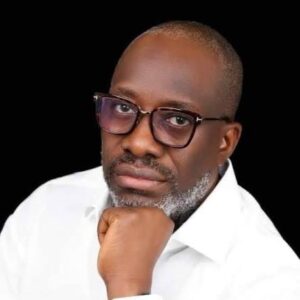
In a season where cynicism often masquerades as wisdom and criticism has become our national pastime, I recently spent time reviewing three significant interviews: one with B.D. Lawal, another with Obiora, and, of course, the widely discussed interview with Peter Obi.
By the time I finished listening to all three men, I arrived at a simple but profound conclusion: despite our political divisions, ideological differences, and competing visions of the future, many Nigerians genuinely love this country and sincerely believe that much better is possible.
That realization gave me hope.
The first step toward national progress is believing that progress is possible. Once a people lose faith in the possibility of improvement, decline becomes inevitable. Fortunately, Nigeria still possesses men and women who, despite everything, continue to imagine a better tomorrow. The challenge before us is finding the courage to take the small but necessary steps that transform aspiration into reality.
B.D. Lawal was particularly fascinating.
He is an extremely dangerous man not because he poses any threat to society, but because he possesses a quality that is increasingly rare in public life: brutal honesty. His candour is almost unsettling. He appears to be one of those individuals who genuinely does not care about the consequences of telling the truth as he sees it.
More importantly, he has occupied spaces where consequential decisions were made. He has been at the table and understands what transpired behind the scenes when critical national choices were taken. Such people are invaluable repositories of institutional memory.
My only disappointment was that the interviewer did not push further. There were clearly deeper insights waiting to be uncovered. B.D. Lawal should be interviewed repeatedly and extensively. Future generations may find in his experiences valuable lessons about leadership, power, governance, and the difficult compromises that accompany nation-building.
The Obiora interview reinforced impressions of him I already held.
I saw a man who understands far more than he says. He was diplomatic, perhaps necessarily so, but diplomacy should not be mistaken for ignorance. If one listens carefully enough, beyond the carefully chosen words, it becomes evident that here is a Nigerian who sees many of the pathways that could lead the country toward the proverbial promised land.
More importantly, he appears genuinely interested in helping Nigeria get there.
Then there was Peter Obi.
Before watching his interview, I had already encountered numerous critiques, commentaries, and harsh reviews. Some were thoughtful; others appeared driven more by emotion than analysis.
Rather than rely on second-hand interpretations, I listened carefully to every word he spoke. I watched his gestures, his expressions, his emphasis, and his recurring themes.
My conclusion is straightforward: we all need to cut Peter Obi some slack.
He spoke well.
He did not suddenly reinvent himself. He did not present radically new ideas. In fact, he largely repeated positions he has consistently maintained for years. He challenged others, as he often does, to demonstrate with evidence as he does the integrity they claim in managing public resources. Whether one agrees with him or disagrees with him, consistency deserves recognition.
What also deserves recognition is his courage.
In moments of crisis, Peter Obi repeatedly shows up. Across the country, he visits communities, offers support, lends his voice to causes, and demonstrates a level of personal commitment that is difficult to ignore. One may question his politics, but it is hard to question his willingness to engage.
No nation can afford to waste a human resource like Peter Obi.
Indeed, if he does not win the Presidency of Nigeria, it would still be in the national interest to find avenues through which his discipline, managerial instincts, and passion for accountability can be deployed. He strikes me as the sort of person who could effectively lead an institution such as the South East Development Commission, bringing focus and energy to a clearly defined developmental mission.
Such a responsibility might also provide practical insight into one of governance’s greatest realities: moving societies toward ideal outcomes is often far more difficult than identifying those outcomes.
The distance between vision and execution is where many noble ambitions encounter the stubborn complexities of human behaviour, politics, bureaucracy, and competing interests.
That reality does not diminish the value of idealism. Rather, it reminds us that governing human beings is among the most difficult assignments imaginable.
What concerns me, however, is our growing tendency to approach public figures with the sole objective of finding fault. Criticism is necessary in a democracy. Accountability is essential. But fairness matters too.
Not every statement deserves outrage.
Not every mistake deserves ridicule.
Not every poorly phrased comment should be interpreted in the worst possible light.
Take the now-famous “I cut the grass” statement. To me, it was obvious that Peter Obi was not attempting to impress anyone with his landscaping abilities. The point he was making was that he started from the beginning, that he was involved in building something from scratch and understood every stage of its development. One may disagree with the wording, but the underlying meaning was reasonably clear.
Sometimes we become so eager to attack the messenger that we neglect to engage with the message.
After listening to B.D. Lawal, Obiora, and Peter Obi, I came away with a renewed appreciation for the diversity of thoughtful voices Nigeria still possesses.
They are different men with different temperaments, different experiences, and different approaches. Yet they share one important characteristic: they still believe Nigeria can be better.
That belief should not be underestimated.
Nations are ultimately built by people who refuse to surrender hope, who continue to imagine possibilities where others see only obstacles, and who persist in pursuing progress despite repeated disappointments.
If these interviews reminded me of anything, it is that Nigeria’s greatest asset is not its oil, its minerals, or even its strategic location.
It is the enduring conviction among many of its citizens that this country, against all odds, can still become the nation of our dreams.
Otunba Segun Showunmi
The Alternative.

Leave A Comment