


By the NewsNexus Editorial Board
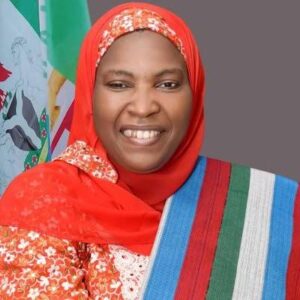
Governor Agbu Kefas’ decision to nominate Hon. Zainab Abubakar Ibrahim Esq, popularly known as “Aunty Zee,” as his running mate for the 2027 Taraba governorship election is more than a routine political appointment. It is a strategic decision that could redefine the state’s political landscape and, if successful at the polls, make history by producing Taraba State’s first female Deputy Governor.
In a political environment where governorship tickets are often balanced by geography, ethnicity or religion, the choice of Zainab Ibrahim suggests that the APC is also placing significant emphasis on gender inclusion, grassroots mobilisation and national party influence. Whether this strategy ultimately delivers electoral victory will depend on how effectively the campaign converts symbolism into tangible political support.
A Profile Built on Party Organisation
Hon. Zainab Abubakar Ibrahim is a legal practitioner and currently serves as the Deputy National Women Leader of the All Progressives Congress (APC). She has also been active in the Inter-Party Advisory Council (IPAC), advocating increased participation of women in politics and governance.
Her political profile has largely been built through party administration, grassroots mobilisation and women-focused advocacy rather than executive government. This distinction is important because it explains both her greatest strengths and the questions that now surround her nomination.
The Strengths She Brings
One of the strongest advantages of the Kefas–Zainab ticket is its historic significance. For decades, women in Taraba have played vital roles in elections and governance, yet the office of Deputy Governor has remained beyond their reach. Her nomination sends a message that women can aspire to the highest executive positions in the state.
Her emergence could also energise female voters, young professionals and civil society organisations advocating greater gender inclusion.
Another significant asset is her national political network. As APC Deputy National Women Leader, she has established relationships with influential party leaders across Nigeria. If effectively utilised, these connections could strengthen political collaboration, attract national attention and potentially benefit Taraba in terms of policy engagement and development opportunities.
Her reputation as a grassroots organiser is equally valuable. Women remain one of the largest voting blocs in Nigeria, and her years of organising women within the APC may strengthen the party’s mobilisation efforts during the campaign.
Her legal training is another advantage. A background in law can contribute to sound policy development, legislative engagement and institutional governance.
Finally, her leadership profile complements Governor Kefas’. While the governor is widely viewed as having a reform-oriented and administrative outlook, Zainab Ibrahim’s experience in political organisation and women’s advocacy broadens the ticket’s appeal to different constituencies.
The Challenges Before Her
However, every political strength carries corresponding challenges.
Perhaps the most frequently raised concern is the limited public evidence of executive governance experience. Running a state government requires administrative capacity beyond party politics, and many voters will want to see evidence that she can effectively discharge the responsibilities of Deputy Governor.
Public recognition is another challenge. Although she enjoys respect within APC structures nationally, she is not yet a household name in every part of Taraba. Building stronger visibility across the state’s three senatorial districts will be crucial.
There is also the burden of expectation. As the first woman to occupy such a position if elected, she would inevitably face heightened public scrutiny. Her performance would likely be judged not only on its own merits but also as a reflection of women’s leadership in executive office.
In addition, several aspects of her public profile—including detailed educational qualifications, previous executive appointments and parts of her professional history—remain relatively limited in publicly available sources. Providing greater public information would enhance transparency and strengthen voter confidence.
Opportunities Before the Ticket
The nomination creates significant opportunities for the APC.
It allows the party to project itself as embracing inclusive leadership and expanding opportunities for women in governance. It also provides a platform to engage women, youths and professionals who increasingly demand broader representation in public office.
Should she emerge as Deputy Governor, observers expect she would champion issues such as women’s political participation, youth empowerment, girls’ education, maternal healthcare, entrepreneurship and gender-responsive governance. These priorities align with many of the policy positions she has publicly supported throughout her political career.
Political Risks
Nevertheless, the ticket also faces risks.
Opposition parties are likely to question her executive experience and test the depth of her statewide political support. Taraba politics has traditionally been shaped by regional alliances, local political structures and candidate acceptability. Those factors will continue to influence the 2027 election irrespective of the historic nature of her nomination.
The campaign must therefore demonstrate that her selection is not merely symbolic but also grounded in competence, readiness and the capacity to contribute meaningfully to governance.
Electoral Outlook
From an electoral perspective, the Kefas–Zainab ticket appears designed to broaden the APC’s coalition by strengthening support among women, expanding grassroots mobilisation and projecting a modern, inclusive image.
Whether those advantages translate into electoral success will depend on effective organisation across Taraba North, Central and South, the strength of the party’s local structures and the quality of its campaign message.
NewsNexus Assessment
From the standpoint of NewsNexus, Hon. (Barr.) Zainab Abubakar Ibrahim represents more of a strategic political asset than a political liability.
Her national political influence, legal background, organisational experience and advocacy for women provide clear advantages. At the same time, questions surrounding executive experience, statewide visibility and public expectations cannot be ignored.
Ultimately, her success—or failure—will not be determined by the historic nature of her nomination alone. It will depend on whether she can demonstrate administrative competence, build trust across Taraba’s diverse communities and translate years of political mobilisation into effective governance.
History may remember her as the first woman nominated for such a role on a successful APC ticket. But history will judge her, as it judges every public office holder, by performance rather than symbolism.
As the 2027 election approaches, the Kefas–Zainab ticket has undoubtedly altered the political conversation in Taraba. The challenge now is to convince voters that this historic choice is also the right choice for governance and development.

Leave A Comment